
A smart panel is a breaker panel that measures every circuit in your home and can switch circuits on and off from an app or on its own. It’s most useful for stretching a home battery during an outage and fitting more big loads onto your existing service. It also costs more than a regular panel, so it isn’t the right fit for every home.
We’re a SPAN partner and authorized installer, so keep that in mind as you read. We install SPAN most often, and we’re happy to install other smart panels too.
Already know what you’re adding? Send us photos of your panel and we’ll tell you what fits.
What is a smart electrical panel?
Your breaker panel splits incoming power into circuits and shuts a circuit off if something goes wrong. A smart panel does the same job, but each circuit also has a sensor and a switch (a relay) controlled by the panel’s computer. That adds three things:
- It measures every circuit. You can see what the AC, oven, pool pump or EV charger is using right now.
- It switches circuits on and off. From your phone, on a schedule or automatically.
- It manages load on its own. When the house nears its limit, it switches off lower-priority circuits. A compatible EV charger can be slowed down instead of switched off.
The breakers still do the safety work, and they keep working like normal breakers no matter what the app is doing.
Smart panel, add-on, load manager or energy monitor?
“Smart panel” gets used loosely. These are the four things people usually mean.
| Full smart panel | Add-on smart panel | Load manager | Energy monitor | |
|---|---|---|---|---|
| Example | SPAN | Lumin (now owned by ABB) | Tesla energy meter, Emporia Pro | Emporia Vue, Sense |
| Replaces your panel? | Yes | No, mounts beside it | No | No, clips on inside it |
| What it controls | Every circuit in the panel | Up to 12 circuits | The EV charger | Nothing on its own |
| Backup power control | Yes | Yes, on connected circuits | No | No |
| Relative cost | Highest | High | Low | Lowest |
| Best for | Panel replacements, battery backup | Backup on a few big loads | Adding an EV charger | Seeing your usage |
If you’re counting on a product to avoid a service upgrade or protect a battery, check two things: that it manages load automatically, and that it’s listed for it (more on that below).
SPAN: the full smart panel
SPAN replaces your existing panel, so the job is a panel replacement with the smart features built in.
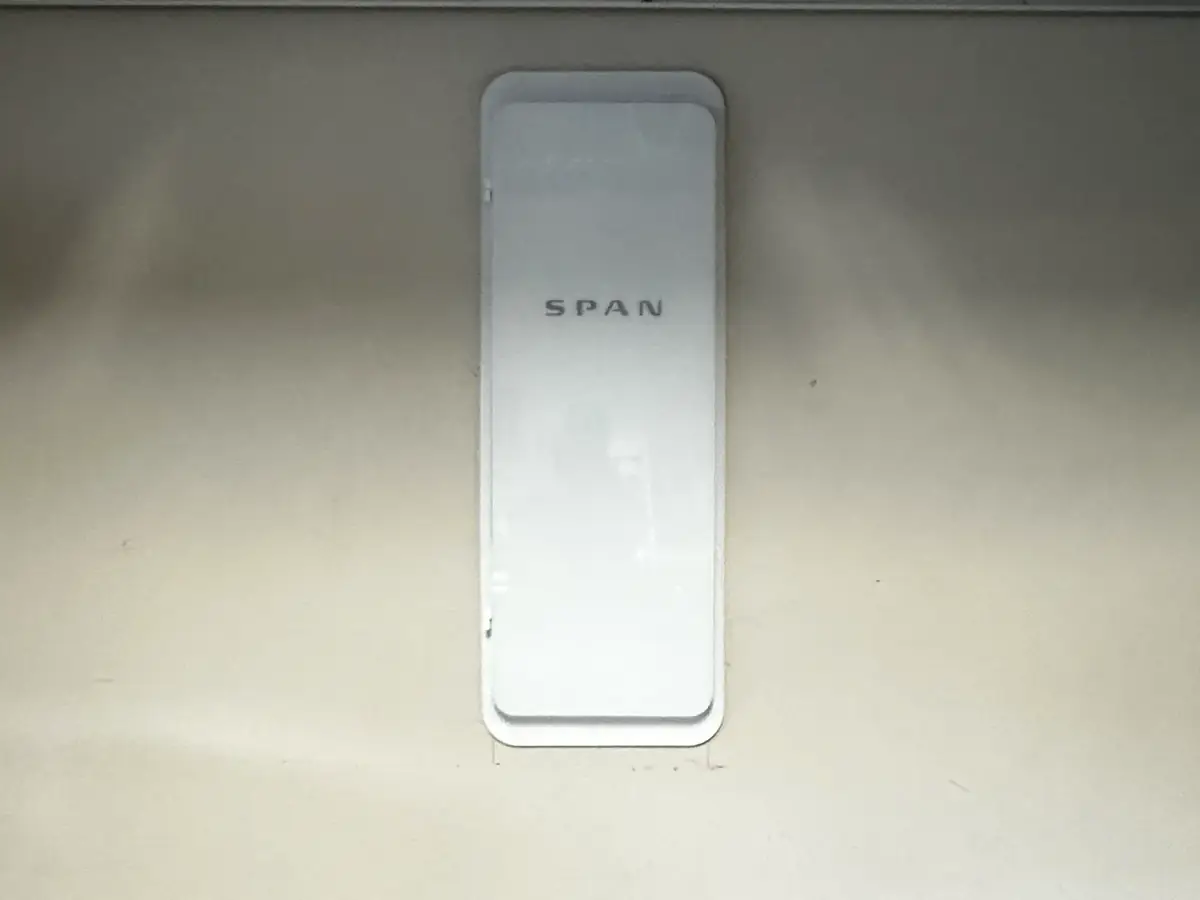
- Models: MAIN 16, MAIN 32 and MAIN 40 have a main breaker. MLO 24 and MLO 48 don’t, so they go behind a separate main disconnect or get added as a second panel. The number is how many circuit spaces it controls.
- Hardware price: $2,550 to $4,100 MSRP, depending on the model.
- Breakers: Square D HOM, Eaton BR and Siemens QP, plus GE THQL on most models. AFCI and GFCI breakers must be the pigtail type. If your current breakers aren’t on SPAN’s list, they get replaced, and that’s part of the quote. On a tandem breaker, both circuits are controlled together.
- Outdoor rated: NEMA 3R, so it can replace an outside panel.
- Listed for load control: SPAN’s panels are certified to UL 3141, the safety standard for power control systems.
- Warranty: 10 years on the panel, 5 years on the SPAN Home Gateway that comes with newer models.
The breakers are standard. The relays, controls and app are SPAN’s, so repairs, parts and updates go through SPAN and its authorized installers.
Lumin: the add-on option
Lumin (now owned by ABB) keeps your existing panel and mounts a second box beside it. Up to 12 circuits move into it, six rated up to 60 amps and six up to 30 amps, and Lumin controls those. Everything else stays on regular breakers. It comes in indoor and outdoor versions.
- Less work than replacing the panel.
- A good fit for battery backup when you only need to manage a handful of big loads.
- Only connected circuits are managed.
- It doesn’t fix an old or undersized panel.
- Check the listing. Lumin’s spec sheet doesn’t show UL 3141, so ask whether it can count toward a load calculation on your job.
What did the 2026 code change for smart panels?
Texas adopted the 2026 National Electrical Code statewide on September 1, 2026. Some cities add their own local amendments. Two changes matter here:
- A listed system’s limit can count in the load calculation. Your electrician sets a limit in the panel, and the code lets that limit count instead of adding up every appliance at full power. The limit has to be set by a qualified installer, the panel has to fail safe if something goes wrong, and each appliance’s wiring is still sized for its full load. Depending on your loads, that can let you add things like an EV charger, heat pump or electric water heater without a service upgrade.
- It has to be listed for it. The code requires anything that controls loads to prevent an overload to be listed as a power control system. UL 3141 is the main standard products are certified to for that.
If you were told before September 1 that you needed a service upgrade, it may be worth a second look. Our panel load calculator gives a quick estimate, and here’s how we run a full load calculation from your utility data.
Do you need a smart panel for battery backup?
This is the most common reason Texas homeowners look at one, especially after outages like Winter Storm Uri and Hurricane Beryl.
A home battery can only deliver so much power at once and only holds so much energy. If the AC, oven and EV charger all run during an outage, they can overload it, and a few big loads running all night can drain it before morning.
A smart panel manages that. You set priorities in the app, and the panel switches off lower-priority circuits before the battery is overloaded. You can change priorities as the outage goes on: run the AC during the hottest hours, then switch it off overnight and keep the fridge, lights and internet on. SPAN says that in its own study of more than 90 simulated outages, batteries lasted 40% longer on average with SPAN managing them. Real results depend on your home.
We set AC circuits up so the compressor isn’t switched on and off too often, and a larger AC may need a soft start to run on battery. We handle soft starts through our HVAC partner.
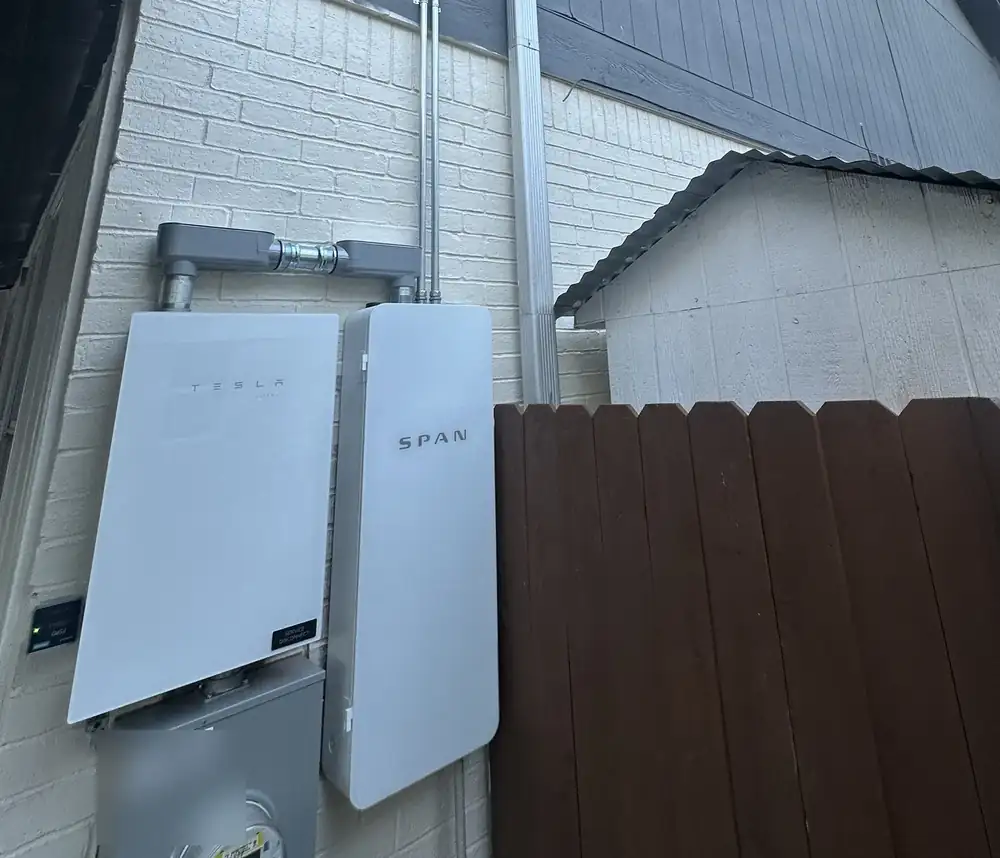
Every SPAN model works with Tesla Powerwall 3 and FranklinWH. The MAIN 32 also supports Powerwall 2 and Powerwall+, Enphase IQ and SolarEdge batteries.
You may not need one
A properly sized battery can back up a whole home without a smart panel. A Tesla Powerwall 3 with Gateway 3 or a Backup Switch can do it, and it can shed one large load like the AC on its own. FranklinWH and Enphase sell their own load controllers for a few circuits. A smart panel adds control of every circuit on top. See whole-home vs partial backup for how to size a system, or Powershare if your car can back up your home.
Planning battery backup?
Send us photos of your panel and tell us which battery you’re considering. We’ll tell you whether a smart panel adds anything or whether the battery covers it on its own.
Does a smart panel work with a standby generator?
Yes, but it isn’t a transfer switch and doesn’t replace one. The generator and its transfer switch go first, and the smart panel sits after them.
Without a battery, a smart panel does less in an outage. With a generator only, SPAN doesn’t shed load automatically, so you’d switch circuits off yourself in the app. Generac and Kohler sell load-shedding modules that keep big loads like the AC from overloading the generator, and for a generator-only home that’s usually the simpler, cheaper answer. If you have a generator and a battery, only one system should manage each big load, or they can work against each other. Read more about our standby generator installs.
Smart panel vs load manager for an EV charger
A smart panel can manage an EV charger like any other big load. With most chargers, it pauses charging by switching the circuit off when the house is busy, then turns it back on. Some cars don’t restart charging on their own after that, so it’s worth testing yours.
SPAN also makes its own charger, SPAN Drive: 48 amps, a J1772 connector (Teslas use an adapter), $750 MSRP. It only works with a SPAN panel, so check that it fits your model. With it, the panel can turn the charging rate down anywhere from 6 to 48 amps instead of switching it off.
If an EV charger is the only reason you’re looking, a smart panel is usually more than you need. A load manager costs far less and doesn’t replace your panel. That’s why smart panels rank #3 in our load management comparison, behind the Tesla Wall Connector with Tesla’s energy meter and the Emporia Pro. See our EV charger installs.
How much does a smart panel cost in Texas?
SPAN’s hardware runs $2,550 to $4,100 MSRP. On our recent quotes, a single SPAN panel has come to roughly $4,500 to $6,500 installed, including the panel, labor and permit. A few things raise the price:
- Breakers SPAN doesn’t accept. They all get replaced, and AFCI and GFCI breakers cost the most.
- More circuits. A bigger model, or a second panel.
- Your service. An old meter base or other service work found on site.
A smart panel costs more than a standard panel replacement. If your panel needs replacing anyway, you’re paying the difference for the smart features. If your panel is fine, you’re paying for a whole new panel to get them.
What install day looks like
- Power off. Plan on the power being off most of the day. We usually need your utility (Oncor, CenterPoint, Austin Energy, CPS Energy or your co-op) to disconnect it.
- Panel swap. We move every circuit to the new panel, replace any breakers SPAN doesn’t accept and install a whole-home surge protector. Code requires one when the main panel is replaced, and SPAN requires one on every install.
- Inspection and reconnect. Some cities inspect before the utility turns power back on.
- Setup. We commission the panel, set the load limits and walk you through the app.
Is a smart panel worth it?
Worth it when:
- Your panel needs replacing anyway: it’s old, damaged, too small, or a Federal Pacific, Zinsco or other panel we replace rather than add to.
- You’re adding battery backup and want to choose what runs during an outage.
- You’re going all-electric with several big loads and want to fit them on your existing service.
- You want to see every circuit and what’s driving your bill.
- You want to be ready for more electric loads, battery programs and time-of-use pricing.
Not worth it when:
- You’re only adding an EV charger to a healthy panel. Use a load manager.
- You just want to see your usage. An energy monitor costs a fraction of the price.
- Your backup is a generator only. The generator’s load-shedding module usually covers it.
- Your service is too small for how you live. Load control only stretches a service so far.
What do SPAN owners like about it?
Owner reviews and forum threads tend to praise the same few things:
- Seeing every circuit. Owners often find surprises, like a home office or a forgotten garage heater using more than they thought, and change habits once they can see it.
- The app. One solar homeowner who lives with SPAN called it “clean, fast, and actually useful.”
- Remote control. Switching off a circuit from your phone, from anywhere.
- Outage priorities. Choosing which circuits a battery keeps running, and changing that mid-outage.
- EV charging with SPAN Drive. Owners like charging that adjusts to the house, or to solar production, on its own.
- Reliability. Reviewers report few complaints about panel failures.
The common complaints are the price, reliance on SPAN’s cloud and app for the smart features, solar readings that sometimes don’t match the inverter’s app, and that each panel covers one 200-amp service, so larger homes need two.
Questions to ask before you buy
- Does it replace my panel or sit beside it, and how many circuits will it control?
- Is it listed as a power control system?
- Will it work with my battery, generator, solar and EV charger?
- What still works if the internet is down?
- Is the installer authorized by the manufacturer? SPAN requires it.
- Does the quote include permit, surge protection, breaker replacement and any second panel?
Why smart panels keep getting more useful
A smart panel earns its keep today with battery backup and load control. A few trends already underway give it even more to do over time. None of them is guaranteed to pay off for every home, so treat them as added value on top of what the panel does now.
- More big electric loads. A second EV, a heat pump, an induction range, an electric water heater. Each one pushes a home closer to its service limit. A panel that can share capacity between them is the alternative to upgrading the service every time you add something.
- Virtual power plants are growing in Texas. A virtual power plant (VPP) pays homeowners to let their batteries help the grid during peak demand. ERCOT raised the cap on its residential VPP pilot to 500 MW in March 2026, and programs from Austin Energy, Tesla Electric and others already pay battery owners. Today those programs pay for the battery, not the panel. A smart panel helps you take part without losing control of what stays on when the battery is sending power to the grid.
- Utilities are starting to manage homes, not just meters. In 2026, PG&E in California began offering SPAN equipment to customers so it can limit neighborhood demand during peaks instead of building new grid equipment. Texas utilities haven’t announced anything similar yet. If they do, homes that can flex their load are likely to be first in line for those programs.
- Time-of-use pricing. More Texas electricity plans price power by the hour, from free nights to high peak prices. A smart panel can run big loads automatically when power is cheap.
- Homes as small data centers. In April 2026, SPAN and Nvidia announced XFRA, a network of AI computing units installed at homes and run through a SPAN panel and battery. SPAN says hosts get the panel and battery installed at no cost plus discounted electricity and internet. The first 100-home pilot is in new construction in the Southwest, not Texas, and it’s still unproven. It shows where the industry thinks the spare capacity in homes could go.
The short version: the grid is moving toward homes that can adjust their power use automatically, and a smart panel is how a home does that. Whether that turns into money in your pocket depends on programs that are still taking shape.
Our take
We like SPAN for the right job: when the panel needs replacing anyway, or when a battery backup project needs control of every circuit. For a single EV charger on a healthy panel, we’ll point you to a load manager, even though it’s the cheaper job.
Not sure if a smart panel fits your home?
Send 3 photos: your panel with the door open, the label inside the door, and your meter. Tell us what you’re adding. We’ll recommend a smart panel, a load manager or a panel upgrade, and send a real price. We install across Austin, Houston and Dallas–Fort Worth.
Frequently asked questions
How much does a smart panel cost to install?
On our recent quotes, a single SPAN panel has come to roughly $4,500 to $6,500 installed, including the panel, labor and permit. A larger model, a second panel or replacing breakers SPAN doesn’t accept adds to that. Your quote depends on your home.
What are the downsides of a smart panel?
Cost is the big one: it’s a new panel, not an add-on. You also rely on one company’s hardware, app and updates, the app needs internet, and only an authorized installer can install and service it. Most circuits can only be switched on or off, not slowed down.
Will a smart panel lower my electric bill?
Not by itself. It shows you which circuits use the most power and lets you schedule or switch them off, which can help you cut use. The savings depend on what you change.
Can a smart panel help me join a virtual power plant?
Texas virtual power plant programs pay for the battery, not the panel. A smart panel helps you take part by keeping your essential circuits running when the battery is sending power to the grid.
Is a smart panel worth it just for an EV charger?
Usually not. If your panel is healthy and only needs help with one charger, a load manager does the job for much less.
What happens if the internet goes out?
The app and remote control need internet. Your breakers always protect your circuits like a normal panel. SPAN’s local backup interface is on the MAIN 32 today, with other models expected later, so ask what still works offline for the model you’re quoted.
Does a smart panel work with solar?
Yes. SPAN works with solar and shows solar production in its app. We install the smart panel and battery, and our solar partner installs the panels.
Sources
- SPAN Panel MAIN 32 specifications (SPAN)
- SPAN Panel MAIN 40 specifications (SPAN)
- SPAN Drive (SPAN)
- SPAN backup study (SPAN)
- SPAN Home On-Premise (SPAN support)
- Lumin Smart Panel outdoor tech specs (Lumin)
- 2026 NEC Article 130, energy management systems (UL)
- 2026 NEC changes: power control systems (pv magazine)
- Powerwall 3 datasheet (Tesla)
- Span is building a new kind of electric utility (Heatmap)
- Span and Nvidia announce XFRA (pv magazine)
- Virtual power plants in Texas (Native)
- SPAN review from a solar homeowner (Solar Homeowner Guide)
- SPAN panel overview and owner feedback (SolarReviews)