
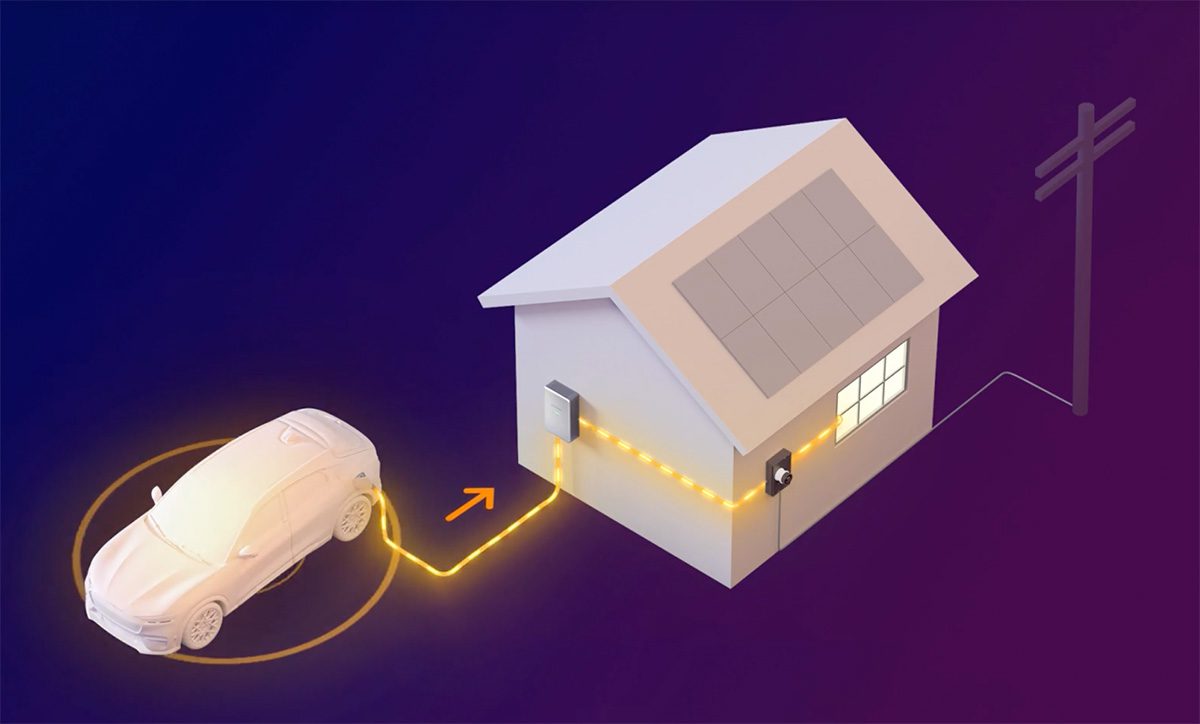
How Electricity Learned to Flow Both Ways
The simplest way to understand bidirectional charging is to picture electricity that can run both ways through the same wire. Traditional charging has always been a one-way street: the power that comes out of your wall is alternating current (AC)—a sine wave that wiggles up and down 60 times a second in the US. Your battery, however, can only store direct current (DC)—a flat, steady voltage like a AA battery. So every charger contains a rectifier: a set of diodes that acts like a one-way valve, letting the positive humps of the AC wave through and flipping the negative ones upward, turning the wiggle into a steady push of electrons. That process is called rectification.
Bidirectional charging simply reverses it. The same power electronics that once only rectified now also invert. The car takes the flat DC from its battery, chops it with ultra-fast silicon-carbide transistors, and rebuilds a perfect 240 V household sine wave that can run your refrigerator, your neighbor’s house, or the regional grid itself.
Inside a modern bidirectional electric vehicle, the magic happens thanks to wide-bandgap silicon-carbide transistors—tiny electronic faucets that switch on and off billions of times per second. Old-school silicon transistors leaked heat, needed giant cooling fins, and wasted 4–5 % of your electricity every time you charged or discharged. Silicon-carbide (SiC) transistors are superheroes: they handle ten times the voltage, switch ten times faster, run at oven-like temperatures without breaking a sweat, and lose less than one percent of the power that flows through them. Between 2023 and 2025 their price crashed from over a dollar per watt to under thirty cents, making reversible 19 kW flow cheap enough to stuff into every new EV as standard equipment.
How Bidirectional Charging Works
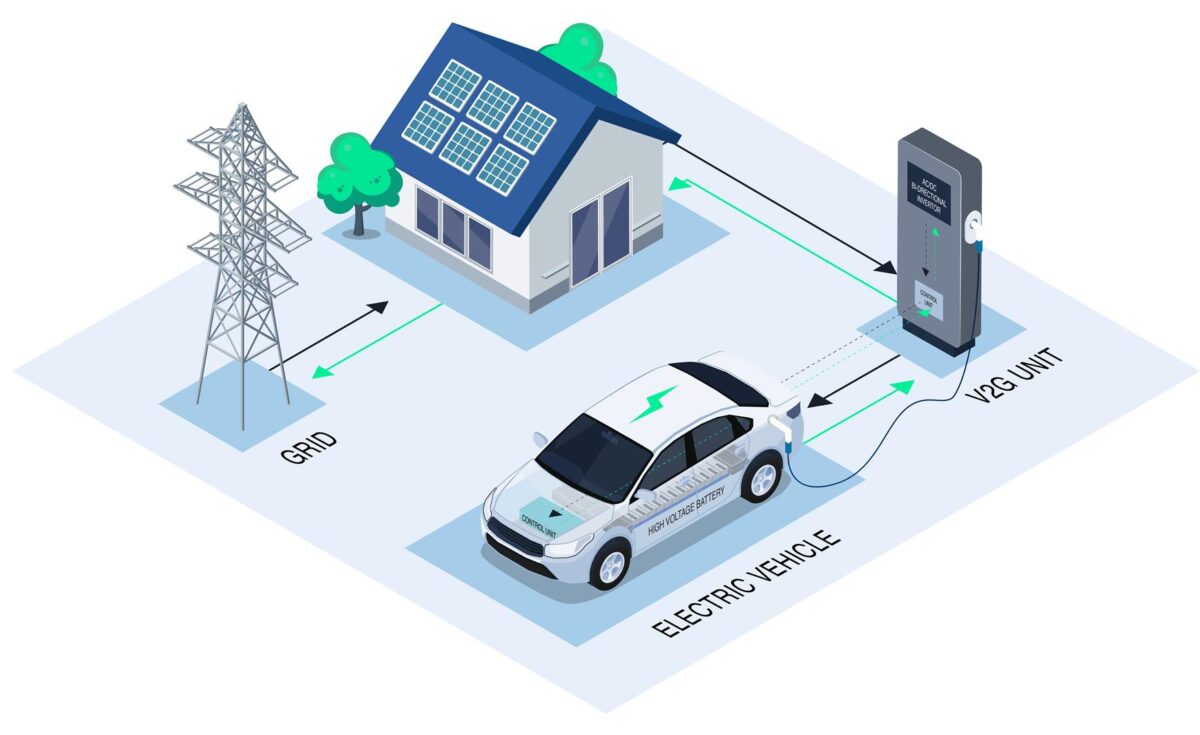
Vehicle-to-Home (V2H) and Vehicle-to-Building (V2B)
Your car is quietly replacing your generator and home battery. Plug in and the instant the grid dies or prices explode, the house flips a silent switch and starts running straight off the car. Most 2025 systems deliver up to 11–12 kW continuous. That is enough to keep the light loads of a typical modern home running for three to five full days on an 80–100 kWh pack. You do nothing. The car and house agree to leave enough range for tomorrow and power everything else like the battery grew out of your foundation. Drive away and it flips back to the grid. During every hurricane, ice storm, and wildfire outage this year, thousands of bidirectional Ford, GM, and Tesla trucks have already kept individual families warm and cozy—exactly what the system was built for, and the numbers are growing fast.
Vehicle-to-Grid (V2G)
While you sleep, your car turns into a cash machine. Utilities see millions of parked batteries as one giant remote-controlled power plant. At 6 p.m. when demand spikes, they ping your car: “Send us up to 12 kW right now and we’ll pay $1.20 per kWh.” Your car instantly pushes electricity their way through the same plug and wires $12–$30 straight into your bank every evening. In Britain the average Kia EV9 owner made £1,420 last year just for parking normally. In California GM and Tesla owners are clearing $1,500–$2,800 annually at current 11–12 kW limits. By 2030 Europe will have more instant clean storage from parked cars than France gets from every nuclear reactor it owns.
In Texas, however, the cash machine is still in beta. ERCOT and the Public Utility Commission of Texas require every EV to sell power only through an aggregated virtual power plant—no solo deals allowed. As of November 2025, the only real programs are Tesla Electric VPP (mostly for Powerwall + EV combos in Oncor and CenterPoint areas, paying $10–$50 per month plus small event bonuses) and a handful of tiny pilots run by Sunrun, Stem, or utilities. Real payouts for the few thousand Texans enrolled top out at $200–$800 per year, not thousands. There are no $1.20/kWh retail-rate credits yet, no nightly $12–$30 deposits, and no “ping your car at 6 p.m.” for big money. The statewide ADER pilot is expanding fast, and 2026–2027 rules will finally open proper retail credits and bigger cheques—but right now Texas owners get blackout-proof backup and the satisfaction of helping the grid, while the serious cash flows to drivers in California, Britain, and Australia. The infrastructure is ready, the cars are capable, and the money is coming soon. For now, the meter is running—just not as loudly as in other places.
Vehicle-to-Load (V2L)
Open the frunk, the bed, or a little side panel on your EV and you’ll find a regular 120 V or 240 V household outlet built right into the car itself. Pop the lid, plug in any normal cord (extension, power tool, crockpot, TV, fridge, welder, whatever), and up to 3.6 kW of perfect household power flows straight out of the battery, no wallbox, no electrician, no generator, no noise, no gas.
You’re tailgating? Plug the blender and big screen into the Ford F-150 Lightning’s frunk and run the whole party. Camping in the wilderness? Open the Rivian R1T’s gear tunnel and keep the cooler, lights, and coffee maker humming all weekend. Hurricane knocks the grid out? Run an extension cord from the Kia EV9’s side outlet to the fridge and a few lamps and keep food cold for days. On a job site? Plug the circular saw straight into the Cybertruck’s bed outlets and cut lumber with full 240 V power all afternoon.
It’s a silent, rolling power strip that follows you anywhere you drive. Every major bidirectional truck and SUV rolling off the line in 2025 has at least one of these magic built-in outlets, ready the second you need power and nowhere near a wall.
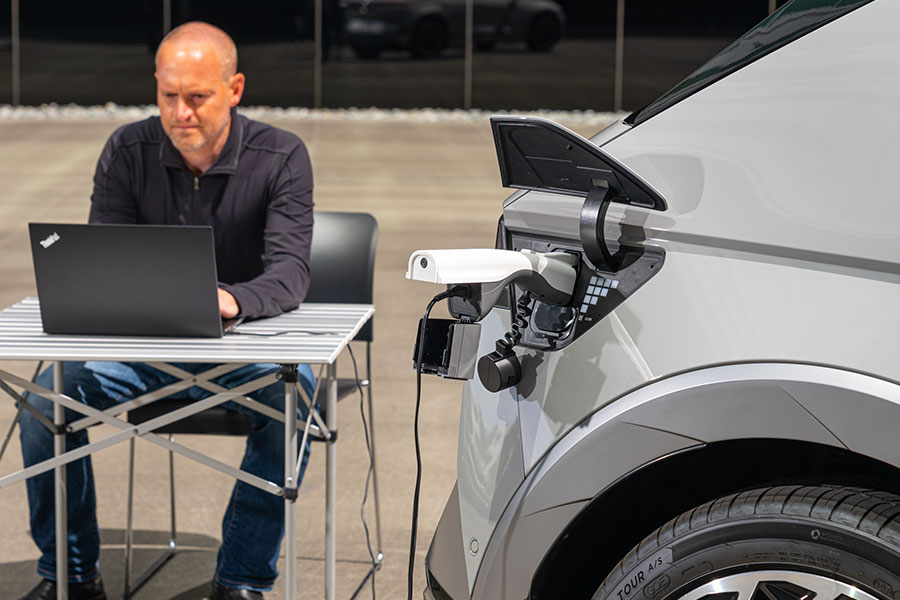
Vehicle-to-Everything (V2X)
The newest cars do all three at once. Plug in and the car powers the house at 11–12 kW. The utility pings at 7 p.m. and it sells 11 kW for cash. Saturday you run the backyard movie projector straight off the frunk. One battery, one plug, zero effort. The same electrons you bought at 2 a.m. for eight cents are worth seventy cents at 6 p.m., and the car decides on the fly which direction makes you richer or keeps you cooler.
Disclaimer:
Almost every bidirectional system on the road is currently limited to 11–12 kW continuous (48–50 A at 240 V). GM’s 19.2 kW Ultium hardware exists in a handful of 2025 Silverado EV RST First Edition trucks, but the vast majority of owners—Tesla, Kia, Hyundai, Ford, Rivian, Nissan—are capped at 11–12 kW. That means that all-electric houses with tank water heaters, double ovens, or 5-ton heat pumps can spike to 30–50 kW for seconds, which far exceeds the output from your EV. Those loads can get paused by smart panels or need to stay off until the grid returns. Add a $1,200–$2,500 critical-loads subpanel and you’ll never notice. 19–30 kW systems are already in testing for 2026–2027, but right now 11–12 kW is the real-world standard.
Benefits of Bidirectional Charging
Backup Power
Bidirectional charging transforms an electric vehicle into a highly reliable whole-home backup system. During grid outages—whether caused by extreme weather, equipment failure, or planned maintenance—a typical 80–100 kWh EV battery can sustain essential and non-essential household loads (lighting, refrigeration, HVAC, communications, medical devices, and cooking appliances) for three to five days. This capability eliminates the need for separate standby generators or dedicated home battery systems, delivering resilient, emission-free power with automatic seamless transfer and no manual intervention. Real-world deployments in 2025 have already prevented hardship for thousands of households during hurricanes, winter storms, and wildfire-related outages.
Response to High Grid Demands
Bidirectional systems enable vehicles to serve as distributed energy resources that enhance grid stability during periods of peak demand. Utilities can remotely dispatch stored energy from aggregated EV fleets, reducing strain on transmission infrastructure and deferring or eliminating the need for carbon-intensive peaker plants. Vehicle owners contribute to frequency regulation, voltage support, and congestion management while receiving compensation, creating a symbiotic relationship that strengthens grid reliability and accelerates the integration of renewable energy sources.
Export to the Grid and Earn
Through vehicle-to-grid (V2G) programs and virtual power plants, owners can monetize excess battery capacity by exporting electricity at wholesale or retail rates. Current programs demonstrate annual earnings of £1,420 in the United Kingdom, $1,500–$2,800 in California, and $200–$800 in Texas, with payments scaled to discharge volume and market conditions. These revenue streams effectively reduce the total cost of vehicle ownership and, in many cases, offset a significant portion of electricity expenses.
Optimized Charging Costs and Energy Savings
Bidirectional chargers intelligently shift energy flows to minimize costs and maximize efficiency. Owners charge during low-rate periods (typically overnight), discharge to the home during high-rate periods, and export surplus energy at premium prices—yielding annual savings of $1,200–$2,800 in most markets. When paired with rooftop solar, the vehicle becomes a mobile energy arbitrage platform: excess photovoltaic production is stored at zero marginal cost, then deployed for propulsion, household loads, or grid export. Numerous installations now achieve net-zero summer bills while maintaining full electric mobility at effectively zero fuel cost.
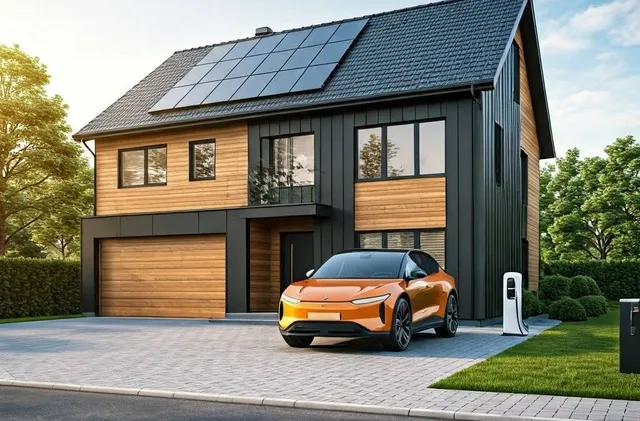
EVs with V2H and V2G Capabilities (November 2025)
Bidirectional charging for Vehicle-to-Home (V2H) and Vehicle-to-Grid (V2G) is rapidly expanding, but remains limited to specific models and regions. Most require a compatible bidirectional charger (e.g., Wallbox Quasar 2, dcbel r16, GM Energy bundle, Ford Charge Station Pro) costing $4,000–$10,000 installed. Power output is typically 9.6–19.2 kW (often 11–12 kW real-world). V2G payouts are available in select utilities/programs (e.g., California, UK, pilots elsewhere).
General Motors (Ultium Platform – V2H standard on 2024+ models, up to 19.2 kW; V2G in pilots)
GM leads US adoption with V2H via GM Energy kits. All Ultium EVs by 2026.
- Chevrolet Silverado EV (2024+)
- Chevrolet Blazer EV (2024+)
- Chevrolet Equinox EV (2024+)
- GMC Sierra EV (2024+)
- GMC Hummer EV (via update)
- Cadillac Lyriq (2024+)
- Cadillac Escalade IQ (2025+)
- Cadillac Optiq (2025+)
Ford
- F-150 Lightning (2022+ – V2H 9.6–11.5 kW with Charge Station Pro; V2G in pilots like Sunrun/BGE)
Tesla
- Cybertruck (2024+ – native Powershare V2H 11.5 kW)
- 2025 Model Y (Q3 2025+ builds – native V2H via OTA)
- All 2022+ models (via third-party DC chargers like Sigenergy SigenStor/Autel MaxiCharger DC Bi-Di – V2H/V2G up to 20–25 kW; native rollout ongoing Q4 2025–2026 for Model 3/S/X)
Hyundai/Kia/Genesis
- Kia EV9 (2024+ – V2H/V2G in US/Europe with Wallbox Quasar 2)
- Hyundai Ioniq 5/6 (V2H/V2G pilots/trials; hardware-ready in some markets)
Nissan
- Leaf (2013+ – V2H/V2G via CHAdeMO/Fermata FE-20; 2026 model adds CCS)
- All-new Leaf (2025+ – V2G-ready)
Volkswagen Group
- ID.4/ID.Buzz/ID.3/ID.5 (V2H in Europe/Sweden pilots; V2G expanding)
- Cupra Born (V2H/V2G)
Volvo/Polestar
- Volvo EX90 (2025+ – V2H standard; V2G pilots)
- Polestar 3/4 (V2G pilots)
Mitsubishi (PHEVs)
- Outlander PHEV/Eclipse Cross PHEV (V2H/V2G)
Others/Emerging
- Mercedes EQS (V2G in Japan/Europe)
- BMW Neue Klasse (2026+ V2H/V2G)
- Rivian R1T/R1S (hardware-ready; bidirectional charger/V2H coming 2025–2026)
V2H is widely available in the US (GM/Ford/Tesla/Kia lead); V2G is mostly pilots/programs (stronger in Europe/UK/Australia). Check local utilities for incentives—e.g., California VPPs pay thousands annually. Upcoming: Ram 1500 REV, Toyota bZ, more VW ID, Lucid Gravity. If buying, prioritize 2025+ GM Ultium or Kia EV9 for full V2H/V2G out-of-box.
Who’s Actually Winning the Bidirectional Race in the US Right Now – November 2025
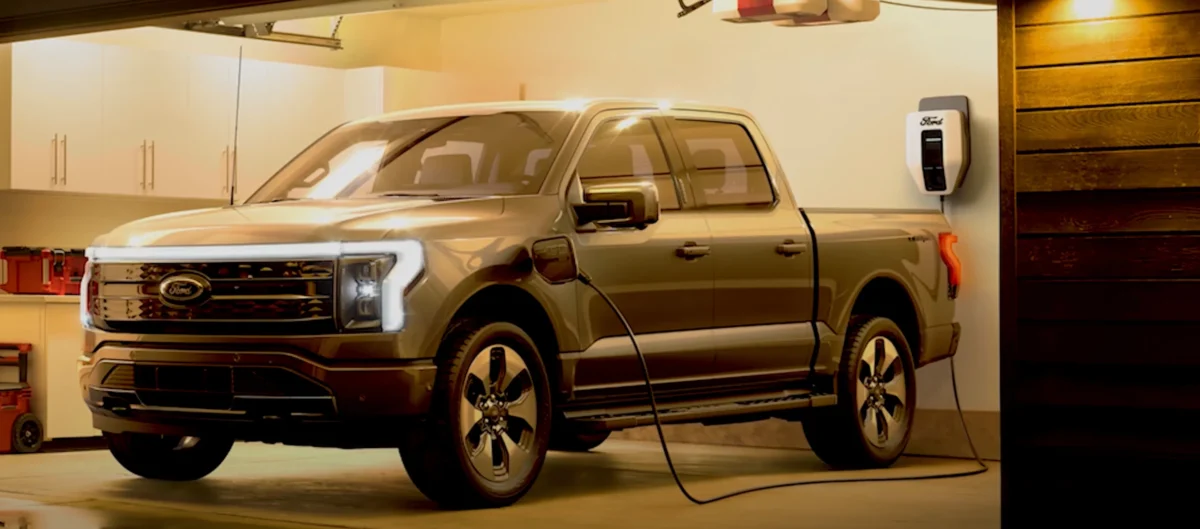
Ford is crushing it. The F-150 Lightning, launched with full V2H in 2022, has over 100,000 units on the road and tens of thousands of active home-backup installations through Sunrun—more real-world bidirectional homes than every other brand combined. GM is sprinting up fast with its 2024–2025 Ultium lineup (Silverado EV, Equinox EV, Blazer EV) and 19.2 kW standard hardware, already powering thousands of houses and closing the gap monthly. Tesla’s Cybertruck looks futuristic and delivers the slickest native Powershare experience (11.5 kW + V2V), but with only ~60,000 deliveries and most owners still waiting for certified Qmerit installs, it’s a distant third in actual homes powered. Kia EV9 rounds out the top four with the easiest third-party V2H setup (Wallbox Quasar 2), but volume is still low.
Bottom line: Ford owns the driveway crown today, GM is about to steal it in 2026, and Tesla is the loudest kid on the block but hasn’t moved as many families off the grid yet. The Lightning is the bidirectional king—until the Silverado EV flood hits next year.
BBest Bidirectional EV Chargers for Texas Homes (November 2025)
In Texas, bidirectional chargers are limited by ERCOT’s ADER pilot rules—no solo V2G sales, everything must aggregate through a VPP like Tesla Electric or Sunrun. Focus on V2H for blackout backup (huge demand after hurricanes/freezes) and future V2G payouts (coming 2026–2027). Rebates are sparse (no SGIP like CA), but Oncor/CenterPoint offer pilots. Top picks prioritize compatibility with Texas’ big sellers (F-150 Lightning, GM Ultium trucks, Cybertruck, Kia EV9) and easy install in hot/humid garages.
1. Ford Charge Station Pro + Sunrun Home Integration System – Best for Most Texans (Lightning Owners)
- Power: 9.6–11.5 kW AC bidirectional.
- Features: Full V2H (80 A), automatic islanding, Sunrun handles everything (permit to install).
- Compatibility: F-150 Lightning only (over 100,000 in Texas).
- Price: $1,300 hardware + $2,000–$4,000 install (Sunrun bundles).
- Why best in TX: Sunrun is ERCOT-approved aggregator; thousands installed in DFW/Houston. Lightning + this combo kept neighborhoods running during 2025 ice events. Enroll in Sunrun VPP for small credits now, big ones later.
2. GM Energy Powershift Charger + V2H Bundle – Best for New GM Truck Buyers
- Power: 19.2 kW AC (highest residential).
- Features: Plug-and-play V2H, dark start, app scheduling.
- Compatibility: All Ultium EVs (Silverado EV, Sierra EV, Equinox EV—booming in TX).
- Price: $7,299 bundle (often discounted $1,500–$4,000 via dealers).
- Why best in TX: GM dominates Texas truck sales; bundle approved for Oncor/CenterPoint pilots. Highest power for big homes with 5-ton AC units.
3. Tesla Powershare Gateway + Universal Wall Connector – Best Native for Cybertruck & 2025 Model Y
- Power: 11.5 kW AC.
- Features: Native V2H/V2V, automatic backup, Tesla Electric VPP enrollment.
- Compatibility: Cybertruck (native), 2025 Model Y (OTA live), older Teslas via Qmerit.
- Price: $2,995 Gateway + $500 connector + $1,500–$3,000 install.
- Why best in TX: Tesla Electric VPP pays $10–$50/month in Oncor/CenterPoint areas (highest Texas payouts). Cybertrucks everywhere in Austin/Houston; easiest app.
4. Sigenergy SigenStor (DC Bi-Di) – Best Universal for Any EV (Including Older Teslas)
- Power: 25 kW DC (modular).
- Features: Full V2H/V2G, solar-ready, off-grid capable.
- Compatibility: Any CCS (Lightning, GM, Kia EV9, ALL Teslas via DC bypass).
- Price: $6,000–$9,000 installed.
- Why best in TX: Works with non-native Teslas; highest power for rural homes. Growing in DFW via local installers; ERCOT-approved for future VPPs.
5. Wallbox Quasar 2 – Best for Kia EV9 Owners
- Power: 11.5 kW DC.
- Features: Compact, simple app.
- Compatibility: Kia EV9/EV6 (official), some GM.
- Price: $5,500–$8,000.
- Why best in TX: Kia EV9 surging in suburbs; Quasar 2 easiest third-party for Texas heat.
6. dcbel r16 (19.2–25 kW DC) – Best Smart-Home Brain
- Power: 19.2 kW continuous (25 kW peak).
- Compatibility: GM Ultium, Ford Lightning, Kia/Hyundai, Tesla (via DC), most CCS.
- Price: $7,500–$10,000 installed.
- Why great in Texas: AI load-shedding keeps your 5-ton AC happy, solar orchestration, black-start capable.
Your Garage Just Became Your Own Personal Power Plant
Your car just became your own a quiet, clean, 80–100 kWh power plant that sits in your garage, starts with a key fob, and costs you exactly zero extra dollars beyond the truck you were going to buy anyway.
Right now, tonight, that power plant is doing three things no utility has ever done for you:
- It keeps your house running when the grid quits (no noise, no fumes).
- It cuts your electric bill by silently moving cheap nighttime juice to expensive daytime hours.
- It puts cash in your pocket when the grid needs help more than you do.
You don’t manage it. You don’t flip switches. You just park, plug, and live.
Tomorrow that same power plant will get smarter. Next year it’ll earn more. Five years from now your kid will grow up thinking “power outage” is something that happens to other people.
But today? Today you walk past the meter box, see it spinning backward, and realize the most valuable thing on your property isn’t the house or the land.
It’s the power plant you drive to work every morning.
Welcome to the first day of owning your own electricity. It feels exactly like freedom.