
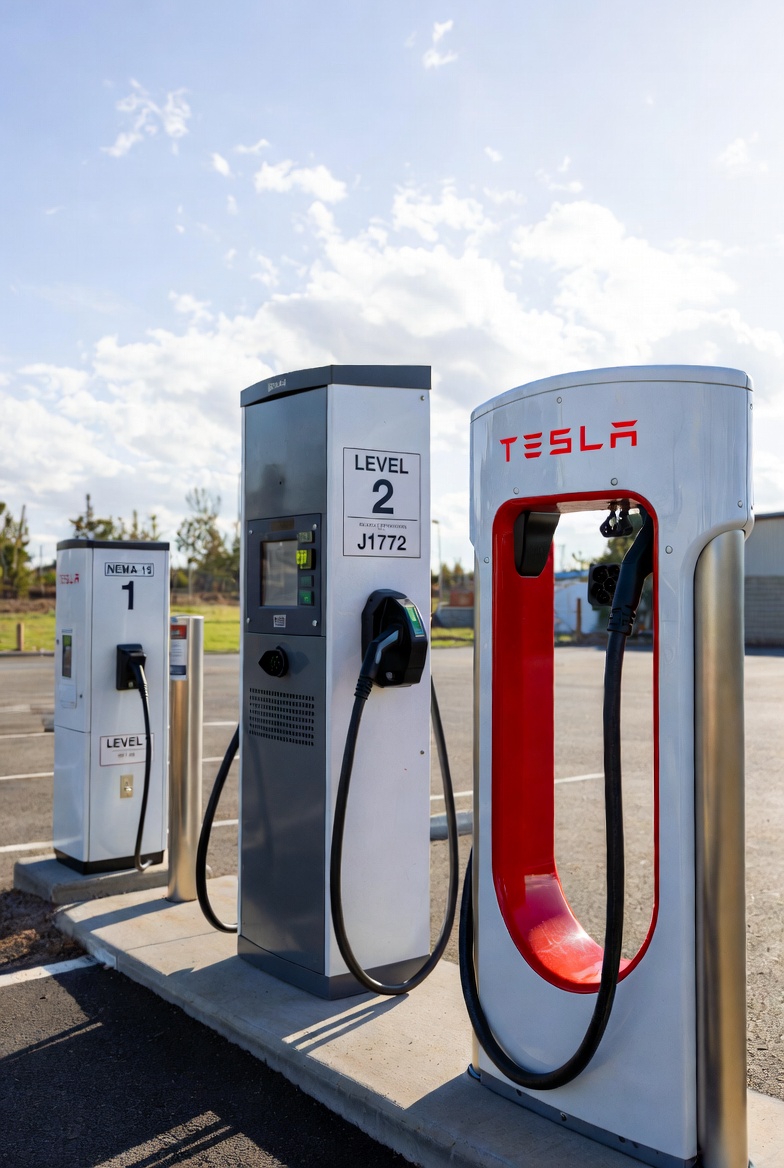
As electric vehicles (EVs) become more common on Austin streets and Texas highways, understanding how to charge them efficiently is key to reducing range anxiety and maximizing your driving experience. Whether you’re a new EV owner in the Capital City or considering making the switch, knowing the differences between Level 1, Level 2, and DC Fast Charging (often called Level 3) will help you choose the right setup for your lifestyle.
In this article, we’ll break down each charging level in detail—including power output, charging speeds, typical use cases, pros/cons, and Texas-specific tips like local incentives and network availability.
What Are the Main EV Charging Levels?
EV charging is divided into three primary categories based on voltage, power delivery, and speed:
Level 1 Charging: The Basics (120V Household Outlet)
Level 1 is the simplest and slowest option. It uses a standard 120-volt AC household outlet—the same one you plug lamps or phone chargers into.
- Power Output: Typically 1–2 kW
- Range Added per Hour: About 2–5 miles
- Full Charge Time: 20–40+ hours for a typical 60–80 kWh battery
- Equipment: Most EVs include a portable Level 1 cord that plugs directly into any grounded 120V outlet. No special installation required.
- Best For: Overnight top-ups if your daily commute is short, or as a backup option.
Pros: Zero upfront cost beyond what comes with your vehicle, widely available at home. Cons: Extremely slow—not practical for regular use or larger batteries.
In Austin homes, Level 1 works fine for light daily driving, but most owners upgrade quickly.
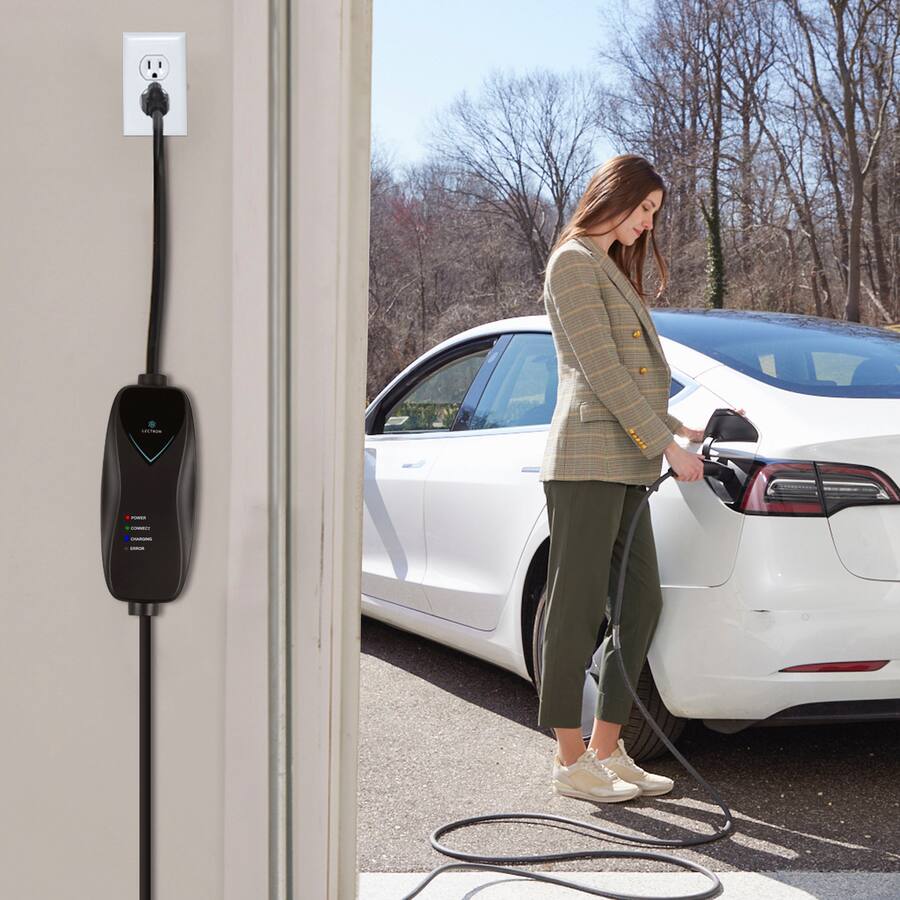
Level 2 Charging: The Everyday Choice (240V)
Level 2 charging steps up to 240-volt AC power, similar to what powers electric dryers, ovens, or RVs.
- Power Output: 3–19 kW (most home units are 7–11 kW)
- Range Added per Hour: 10–60 miles, depending on your EV and charger
- Full Charge Time: 4–10 hours—perfect for overnight charging
- Equipment: Requires a dedicated wall-mounted charging station (e.g., ChargePoint, Emporia, or Tesla Wall Connector). Professional installation by a licensed electrician is needed, including a 240V circuit.
- Best For: Home garages, workplaces, apartments, hotels, and public parking in Austin.
Pros: Fast enough for daily commuting, convenient overnight charging, and often eligible for rebates. In Texas, utilities like Austin Energy offer incentives (check current programs for up to $1,000+ off installation). Cons: Installation costs $500–$2,000 (wiring, permits, etc.), though incentives help offset this.
Level 2 is the sweet spot for most EV owners in Texas—reliable, cost-effective, and battery-friendly. This is where you save the most on fuel cost over time.

DC Fast Charging (Level 3): Road-Trip Ready
Also known as DC Fast Charging (DCFC) or Level 3, this delivers high-voltage direct current straight to the battery, bypassing the vehicle’s onboard converter for maximum speed.
- Power Output: 50–350+ kW (ultra-fast chargers hit 350 kW+)
- Range Added: 100–300+ miles in 20–45 minutes (typically to 80% charge)
- Charging Time: 15–45 minutes for a significant boost
- Equipment: Public stations with connectors like CCS (Combined Charging System), CHAdeMO, or NACS (Tesla’s standard, now widely adopted).
- Best For: Highway travel, quick stops at rest areas, shopping centers, or along I-35, I-10, and other Texas corridors. Networks include Electrify America, EVgo, Tesla Superchargers (open to non-Tesla EVs), ChargePoint Express, and more.
Pros: Enables long-distance road trips across Texas with minimal downtime. Cons: Higher cost per kWh (often $0.30–$0.60+), potential battery wear if used excessively, and peak-hour wait times in busy areas. Not ideal for daily use.
Texas is rapidly expanding DC fast infrastructure, especially around Austin, Dallas, Houston, and major interstates.

Quick Comparison Table
| Feature | Level 1 | Level 2 | DC Fast Charging |
|---|---|---|---|
| Voltage / Type | 120V AC | 240V AC | 400–1,000V DC |
| Power | 1–2 kW | 3–19 kW | 50–350+ kW |
| Miles per Hour | 2–5 | 10–60 | 100–300+ (in 20–30 min) |
| Full Charge Time | 20–40+ hours | 4–10 hours | 15–45 min (to 80%) |
| Typical Location | Home | Home / Work / Public | Highways / Stations |
| Installation Cost | None | $500–$2,000 | Public only |
| Cost per Use | Low (home rates) | Moderate | Higher (pay-per-use) |
| Best For | Light daily use | Daily commuting | Road trips |
Why Understanding Charging Levels Matters in Texas
With EV adoption growing fast in Austin and statewide, matching your charging habits to your needs saves time and money. Home Level 2 charging handles 90%+ of daily driving for most owners, while DC fast options make weekend trips to the Hill Country, Big Bend, or out-of-state easy.
Pro tip: Check utilities or rebates on Level 2 chargers, and use apps like PlugShare, ABRP (A Better Routeplanner), or Tesla’s map to find reliable public stations.
Ready to level up your EV experience? Start with a home Level 2 setup if you haven’t already—it’s the smartest investment for Texas drivers.
— THOR, EV Charging Expert | 1500+ Installs / Last updated: January 29, 2026