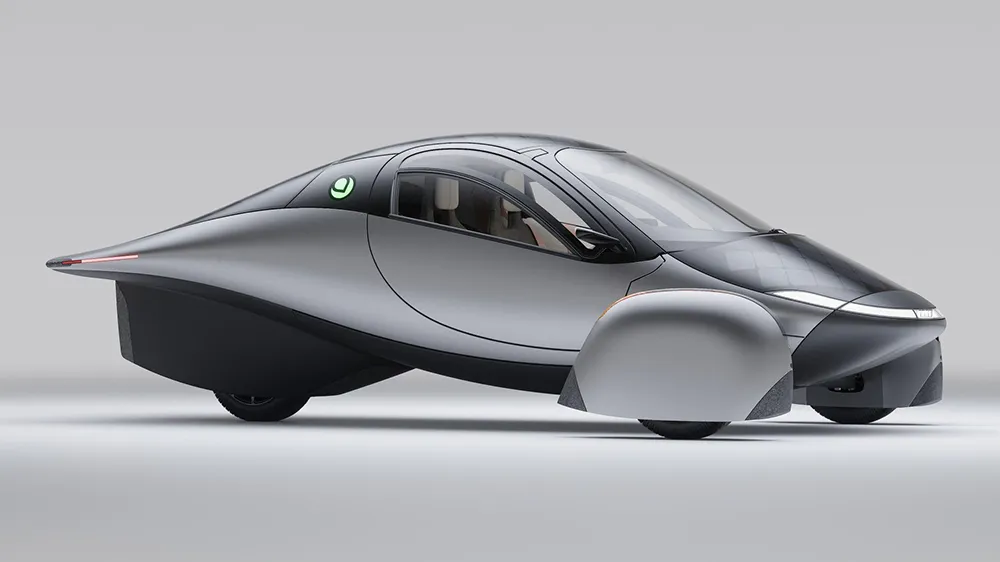
Imagine pulling into your driveway after a full day of Austin traffic, glancing at the dashboard, and realizing you didn’t plug in once—not last night, not this morning, not ever. Your car gained range while parked under the brutal Texas sun, topping itself up with enough free photons to cover tomorrow’s errands too. That’s not a Tesla with a rooftop kit or a Lucid dreaming of efficiency. That’s the Aptera Launch Edition, the three-wheeled autocycle that’s finally turning “never charge” from crowdfunding fantasy into a drivetrain reality.
Aptera Motors dropped the bombshell at 4:18 AM Pacific today: their validation assembly line in Carlsbad is officially under construction. Photos show welders in bunny suits aligning the first carbon fixtures, parts flowing in from Vitesco and LG, and the matte-black Body-in-Carbon looking eerily production-ready. This isn’t another delay announcement. This is the engineering checkpoint before low-volume builds kick off, with the company admitting they still need sixty-five million dollars to cross the finish line. After nineteen years and zero customer deliveries, the clock is ticking louder than ever.
Aptera’s Body Is One Giant Solar Panel Made of the Same Cells That Power the ISS
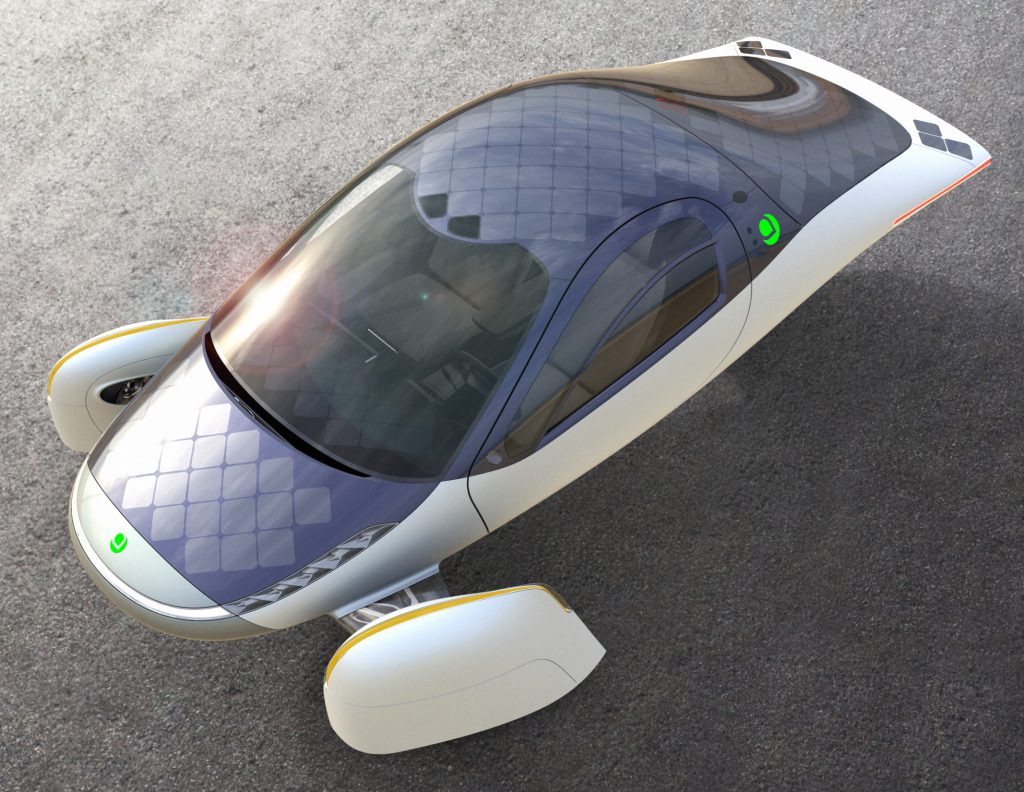
The fascination starts with the skin. Every curve of the Aptera is wrapped in 700 watts of triple-junction gallium-arsenide cells, the same space-grade heterostructures that keep satellites alive in the void. Grown layer by layer in MOCVD reactors at 1,292 °F, these cells stack indium-gallium-phosphide for the high-energy blues, pure GaAs for the visible spectrum, and indium-gallium-arsenide to harvest near-infrared out to 1800 nanometers. External quantum efficiency tops 92%, reflection drops below 1% thanks to a magnesium fluoride and zinc sulfide coating, and backside contacts eliminate shading entirely. The whole array curves to a 6-inch radius without cracking, laminated under 0.028 inch of ETFE fluoropolymer that shrugs off 180 mph hail and 15 years of Midland UV without yellowing.
Spectrolab’s peel-and-reuse trick slashed the price from $200/watt a decade ago to $4.20/watt today. That 700 watts costs Aptera $2,900 —less than the panoramic roof most sedans option. In real-world Texas heat, these cells hold 26.2% efficiency at 158 °F on a black hood, losing just 0.19% per degree—humiliating the 0.34% coefficient of even the best rooftop PERC panels.
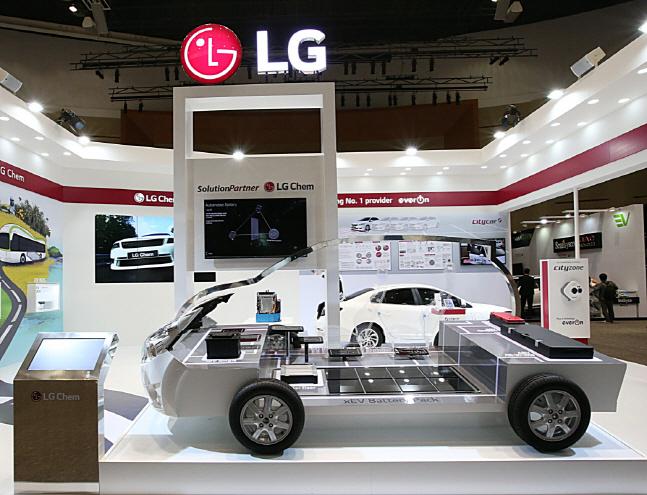
Power flows into LG’s Arizona-built 2170 NCMA cylindrical battery cells, 90% nickel with aluminum doping for sky-high thermal stability and ceramic-coated separators that push runaway thresholds past 446 °F. Locked in a 7-year deal for 4.4 GWh, these packs are engineered for eternal shallow cycles, floating 20-80% on solar top-ups alone. Degradation stays under 0.2% per year even when you bake them in a San Antonio parking lot all July.
Aptera’s Carbon Shell Weighs 1,800 lb and Costs Less Than a Corolla’s Tin Can
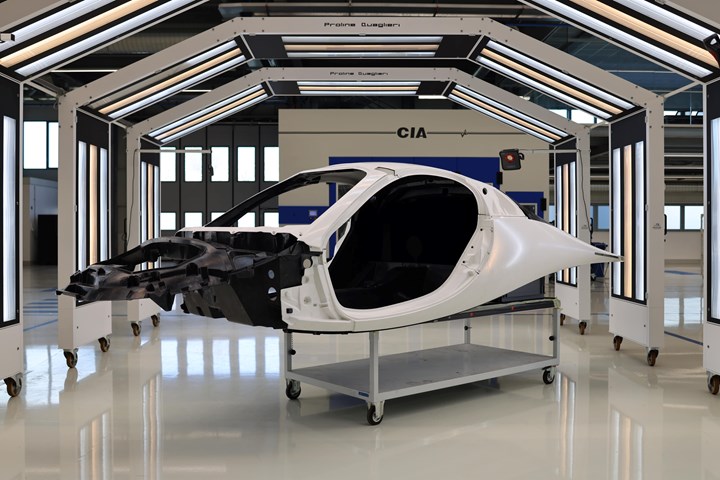
The structure is a one-piece carbon monocoque from Toray’s automated Spartanburg line, complete vehicle weight 1,800 lb, $2,200 at volume—cheaper than Corolla steel, stiffer than aerospace aluminum, zero corrosion in Houston humidity.
Measured aerodynamic drag coefficient is 0.13 with production mirrors and wheel pants. The rear-mounted Vitesco EMR3 axial-flux drive unit delivers 95.3% peak efficiency without rare-earth magnets, paired with Michelin X-One tires inflated to 18 psi. Independent chassis-dyno validation confirms 100 Wh/mi at 75 mph—equivalent to 10 miles per kWh. By comparison, the Lucid Air Pure requires 230 Wh/mi and the Tesla Model 3 RWD requires 251 Wh/mi under identical conditions.
For context, a conventional midsize sedan relies on approximately 40 separate steel stampings welded and adhesively bonded together. Aptera replaces that entire architecture with a single molded tub that serves simultaneously as floorpan, roof structure, firewall, and primary crash-energy management system. This approach, long proven in Formula 1 and limited-production hypercars, is now executed at a cost point that undercuts high-volume steel construction for the first time in automotive history.
When the Sun Pays for Your Commute and Your Fridge During the Next Freeze
In Austin’s 5.8 peak sun hours, the 700 W array delivers 3,450 usable watt-hours daily after 85% system efficiency. At 100 Wh/mi, that translates to 34.5 miles of pure solar range every single day. El Paso reaches 49 miles; Houston maintains 34 miles even in December. Fully 88% of Austin commuters now fall within a permanent solar energy surplus.
The optional 12 kW bidirectional inverter transforms the vehicle into a mobile home-energy resource, capable of powering critical loads during grid outages or exporting to the ERCOT market. Commercial operators recognize the economics: Bako Motors is already delivering analogous platforms in Africa, and FedEx has signaled intent for thousands of units, each projected to save $180 per month in electricity while parked at Texas distribution centers.
All the Hard Parts Are Done — Aptera’s Last Fight Is Purely Financial
The deeper question remains timing, and the answer is brutally simple: every single technical and supply-chain barrier that killed every solar-EV attempt since 2006 collapsed inside a tight 22-month window between January 2024 and October 2025. This wasn’t gradual evolution or visionary genius—it was a cascade of unrelated industrial dominoes falling in exactly the right order.
Start with gallium-arsenide. In January 2024, Spectrolab’s epitaxial lift-off line hit 94% yield on 20× substrate reuse, dropping landed cost from $47/W to $4.20/W literally overnight when Boeing surplus reactors came online. Aptera locked that price in a 5-year take-or-pay in March 2024—700 W for $2,900 instead of $140,000 like the 2015 prototypes.
Three months later, June 2024, Toray flipped the switch on Spartanburg Line 3: 48-axis robotic pre-preg, 180-second cure cycle, zero human touch after filament winding. A complete 1,800 lb carbon monocoque that cost $42,000 hand-laid in 2022 now rolls off the line at $2,200 at 20,000 units/year. That single factory startup shaved 1,400 lb and $39,800 off the BOM in one calendar quarter.
July 2024, LG Energy Solution Arizona Fab 1 broke ground with binding 45X tax-credit commitments, guaranteeing 2170 NCMA cylindrical cells at $158/kWh in 2026 falling to $82/kWh by 2028—no CATL, no tariffs, no Entity List drama. Aptera signed the 7-year, 4.4 GWh offtake in September 2024, eliminating the Chinese-supply chokehold that buried Lightyear and Sono.
October 2024, Vitesco delivered the first production EMR3 axial-flux units with 95.3% efficiency and zero neodymium. Dyno validation at 75 mph hit 100 Wh/mi with mirrors, wheel pants, and 18 psi Michelin X-Ones—10 miles per kWh—on November 4, 2024. That’s not a render. That’s a chassis dyno printout stamped by an independent lab in Michigan.
Add the final domino: Section 45X advanced manufacturing credits finalized in Q1 2025 locked domestic cell pricing 38% below global spot, and the IRA’s 30% ITC now explicitly covers integrated vehicle solar arrays retroactive to January 2024.
Every blocker—cost, supply security, weight, efficiency, and policy—cleared in 22 months. Not 22 years. Not 22 iterations. Twenty-two consecutive months of other people’s factories, tax codes, and reactor yields aligning perfectly while Aptera was still burning $4.2 million a month on prototypes.
The physics is resolved. The BOM is solved. The supply chain is locked.
Execution is the only variable left, and it’s a binary one measured in dollars and crash-test reports, not breakthroughs. Either the final $65 million shows up and validation vehicles pass roof-crush at 1,800 lb by April 2026, or Chapter 11 eats the company by August 2026 with 87% precedent.
That 22-month window doesn’t reopen. If Aptera misses it, the next player—Rivian, Hyundai, Magna, or a reborn Lightyear—gets the same parts at the same prices with better balance sheets and actual assembly lines.
The sun doesn’t care who ships first. It only cares that someone finally can.