

If you’re an EV owner, you’ve likely considered (or already installed) a NEMA 14-50 outlet for Level 2 home charging. It’s the classic 240-volt, 50-amp setup that delivers up to ~9.6 kW of power—adding 25-30 miles of range per hour for most vehicles. It’s popular because it’s flexible: plug in your mobile connector or portable charger, and you’re good to go.
But here’s the harsh reality: Not all NEMA 14-50 outlets are created equal. Cheap residential-grade versions (often $10-15 at big-box stores) are not designed for the continuous high-amperage loads that EV charging demands. They fail—often dramatically—with melted plastic, charred terminals, arcing, and even fire risks. We’ve seen it time and again in the EV community, and as a professional installer at Charge Pro Texas, we fix these messes regularly.
Let’s break down why cheap outlets fail, what makes a good one, and how to protect your home, vehicle, and family.
The Problem: EV Charging Is a “Continuous Load” – Cheap Outlets Aren’t Built for It
Standard household appliances like dryers or ranges use a NEMA 14-50 intermittently—they max out power for short bursts, then cool down. EV charging is different: it’s a continuous load at 32-40 amps (80% of the 50-amp rating per NEC safety rules) for multiple hours every night.
Cheap residential outlets (e.g., basic Leviton 279 or similar generics) use thinner contacts, weaker clamping mechanisms, and materials that soften or degrade under sustained heat. Over time (months to a few years), this leads to:
- Loose connections from thermal cycling
- Increased electrical resistance
- Overheating and arcing
- Melting plastic and burn marks
Real-world examples show the damage: charred terminals, deformed faces, and full meltdowns that could have started house fires if not caught early.
Here are real photos of failed cheap NEMA 14-50 outlets from EV charging—melted plastic, black arc burns, and total deformation after prolonged use:
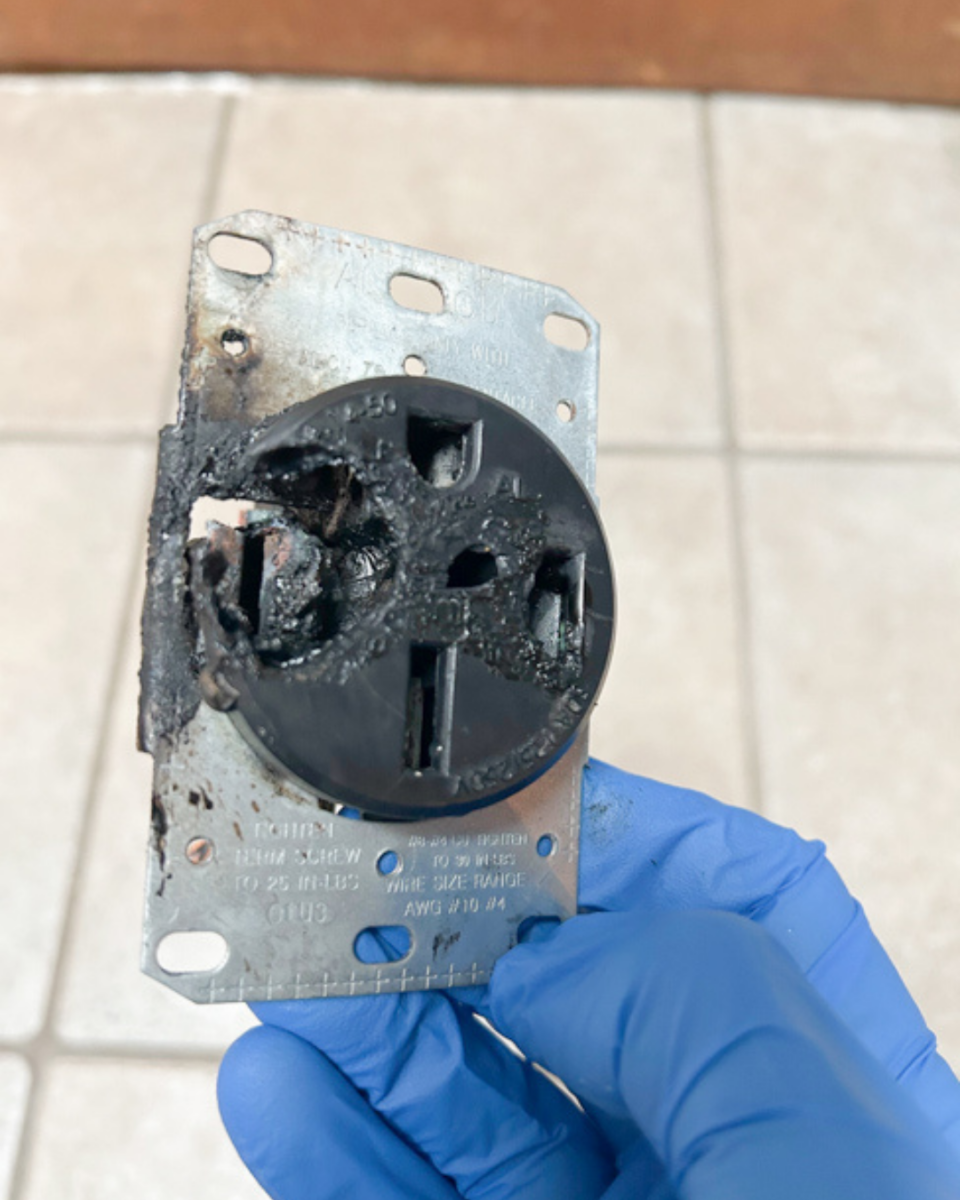
These aren’t rare—one common story: a $12 no-name outlet melts after six months of daily charging, with visible arc burns. Another: a Leviton-style unit fails, sparking a small garage fire before the charger’s thermal protection kicks in.
Beware of Budget Competitors – The Hidden Cost of “Cheap” Installs
In the competitive Austin EV charging market, some installers and “budget” competitors lure customers with rock-bottom prices—often using the cheapest residential-grade NEMA 14-50 outlets ($10-15 from big-box stores), undersized or improper wiring, and skipping critical steps like proper torque on terminal screws.
These shortcuts seem like savings upfront, but they create a perfect storm for failure:
- Cheap residential outlets aren’t rated for the continuous 32-40A load of daily EV charging—they overheat, lose contact tension, and melt over months or years.
- Wrong or undersized wires increase resistance, generating extra heat that accelerates damage.
- No torque on screws (or finger-tight only) leads to loose connections, arcing, and hot spots that can char the outlet and wall.
Real customers who chose these cut-rate options end up with melted, charred NEMA outlets, smoke damage, and garages that smell like regret. We’ve seen (and fixed) too many of these preventable disasters—some even sparking small fires before the charger’s safety features kicked in.
Here a stark examples of what happens when budget shortcuts are taken: severely melted NEMA 14-50 outlet with black arc burns, deformed plastic, and heavy soot from overheating under EV load.
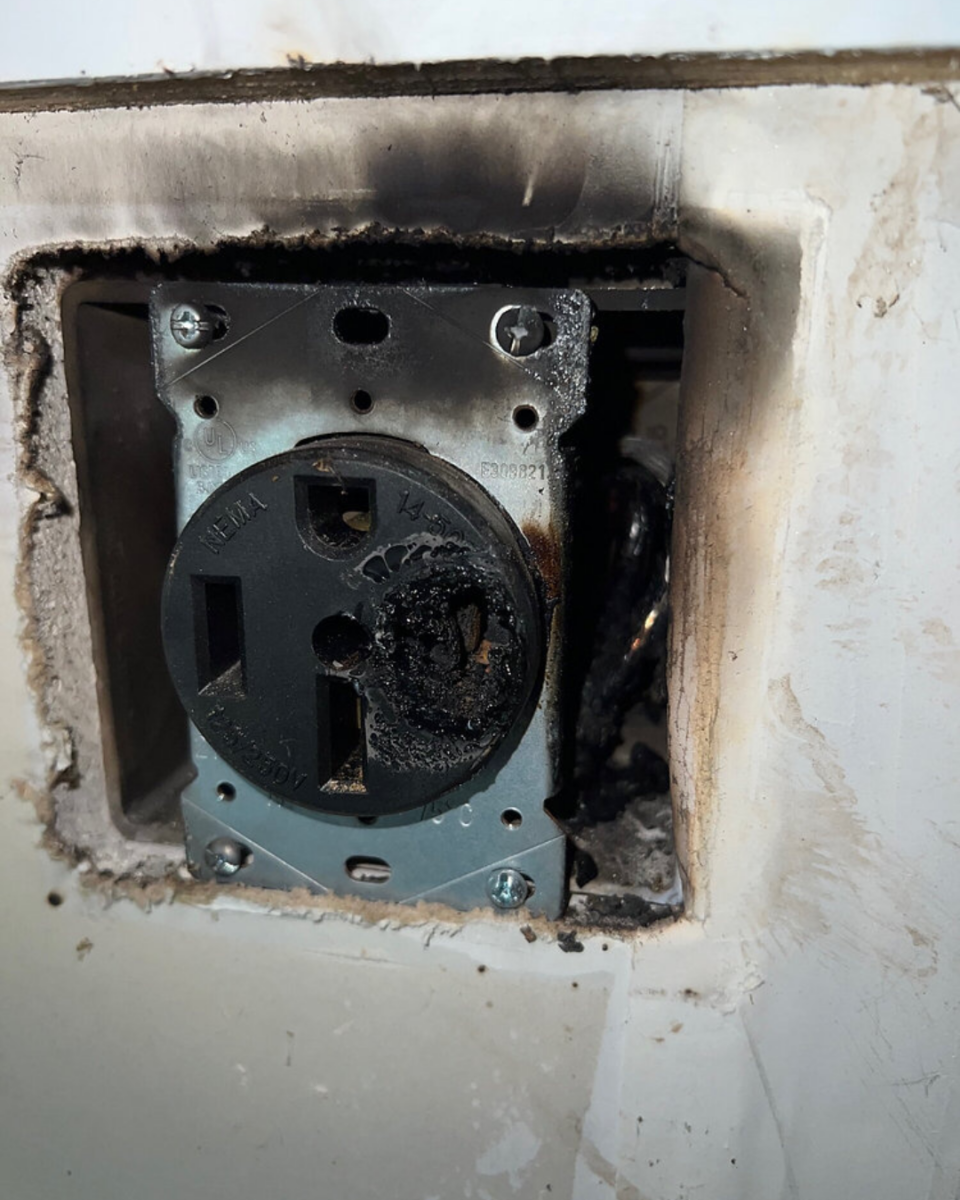
At Charge Pro Texas, we refuse to play that game. We only use heavy-duty industrial-grade outlets from trusted brands like Hubbell (HBL9450A) or Bryant (9450FR)—built with reinforced thermoset bodies, robust brass contacts, and higher temperature ratings for continuous EV duty. We pair them with proper 6 AWG copper wiring and torque every connection to exact manufacturer specs using calibrated tools.
The message is clear: You get what you pay for. A few hundred dollars saved on a budget competitor can cost thousands in repairs, downtime, or worse—safety risks to your home and family. Don’t learn the hard way—choose pros who prioritize quality and do it right the first time.
Why Cheap Outlets Fail: The Key Shortcomings
- Inadequate Contacts and Clamping — Residential versions have smaller, thinner brass contacts that lose grip over cycles. Industrial ones use robust, full-size brass with V-shaped lugs for better wire compression.
- Lower Temperature Ratings — Cheap ones handle ~60°C max continuously; heavy-duty versions are rated for 75°C or higher with thermoset materials that won’t melt.
- Improper Torque & Installation Issues — Terminal screws must be torqued precisely (typically 75 in-lbs for quality units). Finger-tight or under-torqued connections create hot spots. Cheap outlets often have lower torque specs (~25 in-lbs) and weaker screws.
- Plugging/Unplugging Wear — Even if you rarely unplug, daily thermal stress accelerates failure in budget models.
The Solution: Go Industrial-Grade (or Hardwire)
For safe, reliable plug-in charging, use heavy-duty industrial/commercial-grade NEMA 14-50 outlets from trusted brands:
- Hubbell HBL9450A
- Bryant 9450FR (often identical to Hubbell but more affordable)
These are costly but feature:
- Reinforced thermoset bodies
- Heavy-duty brass contacts
- Allen-head screws for 75 in-lbs torque
- Better heat dissipation
Even better? Go hardwired (direct to the charger like a Tesla Wall Connector or ChargePoint). It eliminates the outlet entirely—no plug wear, fewer failure points, and potential for higher amps (e.g., 48A on a 60A circuit).
Bottom Line: Don’t Cut Corners on Safety
A cheap NEMA 14-50 might seem like a bargain upfront, but the “savings” vanish when you deal with melted outlets, damaged chargers, or worse—fire risks. At Charge Pro Texas, we only install industrial-grade outlets (Hubbell/Bryant level), use proper 6 AWG copper wiring, and torque every connection to spec with calibrated tools.
Protect your Austin home and EV—get it right the first time. Ready for a safe, reliable install? Reach out for a quote. Your garage (and peace of mind) will thank you. ⚡💪
— THOR, EV Charging Expert | 1500+ Installs / Last updated: January 14, 2026