
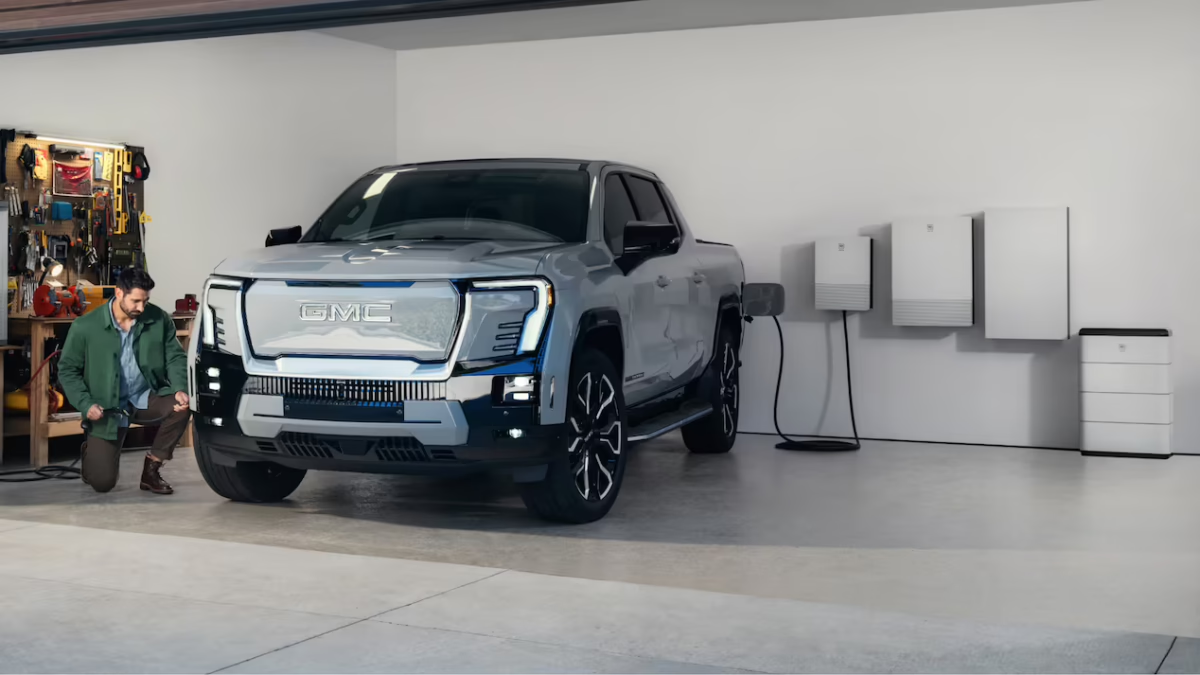
GM bidirectional charging is changing how homeowners think about energy. Instead of electric vehicles only consuming electricity, new systems like the GM Ultium Home platform allow EV batteries to power homes, store solar energy, and potentially support the grid in the future.
In Texas, where renewable energy, extreme weather, and electricity demand are all increasing rapidly, bidirectional EV charging could become one of the most important energy technologies of the next decade.
General Motors has taken a leading role in this shift through its Ultium platform and GM Energy ecosystem. These systems introduce bidirectional charging, allowing energy to flow both into and out of the vehicle’s battery.
Instead of electricity moving in a single direction:
Grid → EV
Power can now flow in multiple directions:
Grid → EV → Home
And eventually:
Grid ↔ EV ↔ Home ↔ Grid
This transforms the EV into one of the most powerful energy assets a homeowner can own.
What GM Bidirectional Charging Really Means
Traditional EV charging works in only one direction: electricity flows from the power grid into the vehicle battery.
Bidirectional charging changes this concept by allowing energy to flow both ways.
There are several forms of bidirectional energy transfer:
| Technology | What It Powers |
|---|---|
| Vehicle-to-Home (V2H) | Your house during outages |
| Vehicle-to-Grid (V2G) | The electrical grid |
| Vehicle-to-Load (V2L) | Tools, appliances, devices |
Today, GM’s system primarily enables Vehicle-to-Home (V2H), allowing your EV to serve as a backup power source for your house.
Future systems will increasingly enable Vehicle-to-Grid (V2G), allowing EVs to actively participate in energy markets.
The GM Ultium Home Energy Ecosystem
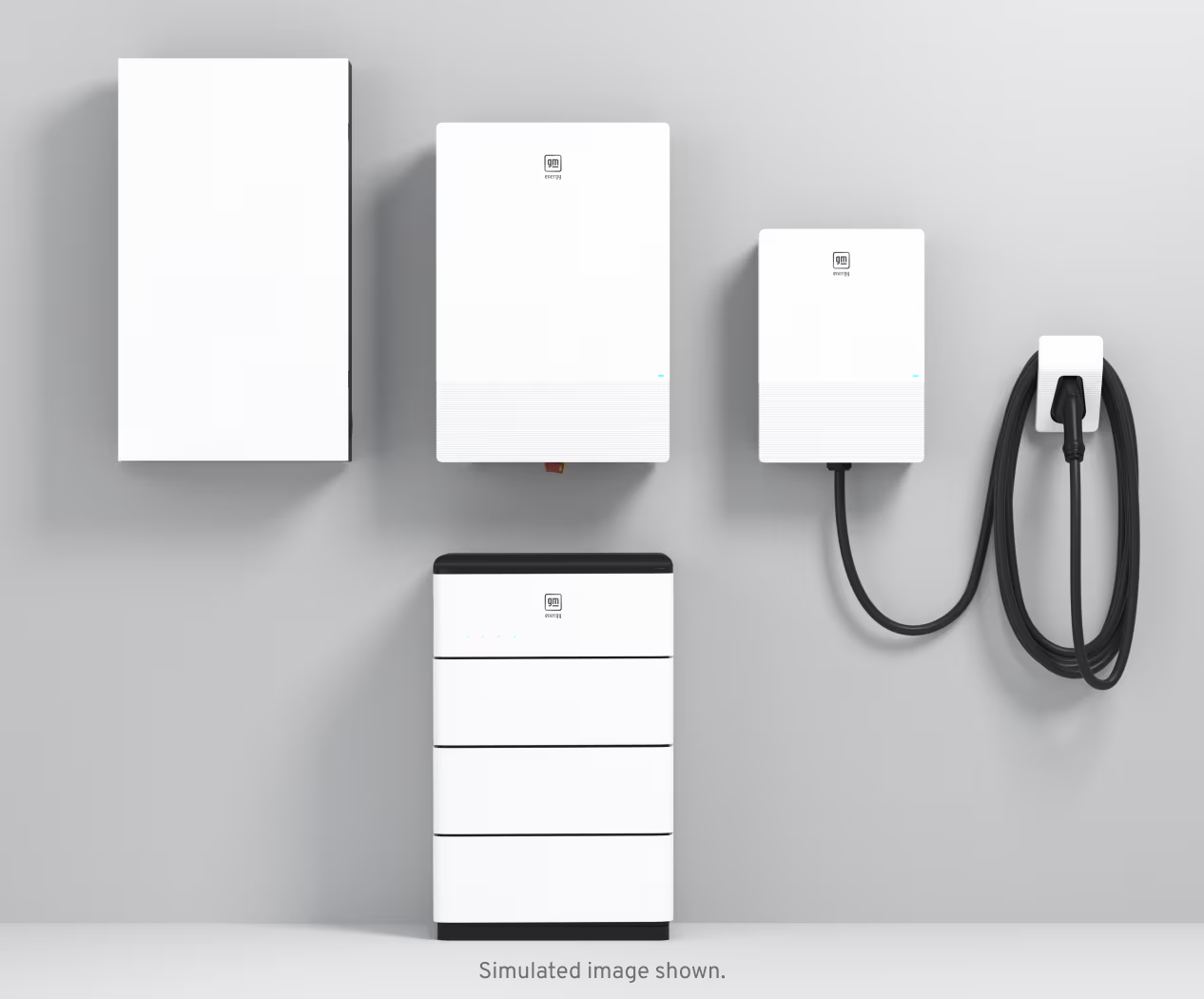
The bidirectional system is built around General Motors’ energy division, GM Energy, which provides the hardware required to connect the vehicle with a home’s electrical system.
PowerShift Charger
The GM Energy PowerShift Charger is a bidirectional Level 2 charger capable of delivering up to 19.2 kW.
Key capabilities include:
• up to 80 amps
• approximately 44 miles of range per hour of charging
• bidirectional energy flow when paired with the V2H system
This charger acts as the primary gateway between the EV battery and the home.
V2H Enablement Kit
The V2H Enablement Kit makes it possible for the EV to power a house.
Major components include:
• home energy hub
• inverter (~9.6 kW output)
• automatic transfer switch
• dark-start battery
The inverter converts the vehicle’s DC battery power into AC electricity that a house can use.
When a power outage occurs, the system automatically isolates the home from the grid and begins drawing energy from the EV battery.
GM Energy PowerBank (Optional)
GM also offers a stationary battery system called the PowerBank.
Available sizes include approximately:
• 10.6 kWh
• 17.7 kWh
• 35.4 kWh
This home battery can store energy from:
• solar panels
• the grid
• the EV battery
Together, the EV battery and home battery create a powerful layered energy storage system.
GM Bidirectional Charging: Whole Home vs Partial Backup
One of the most common questions homeowners ask is whether an EV backup system can power the entire house or only essential circuits.
The answer depends on the system design.
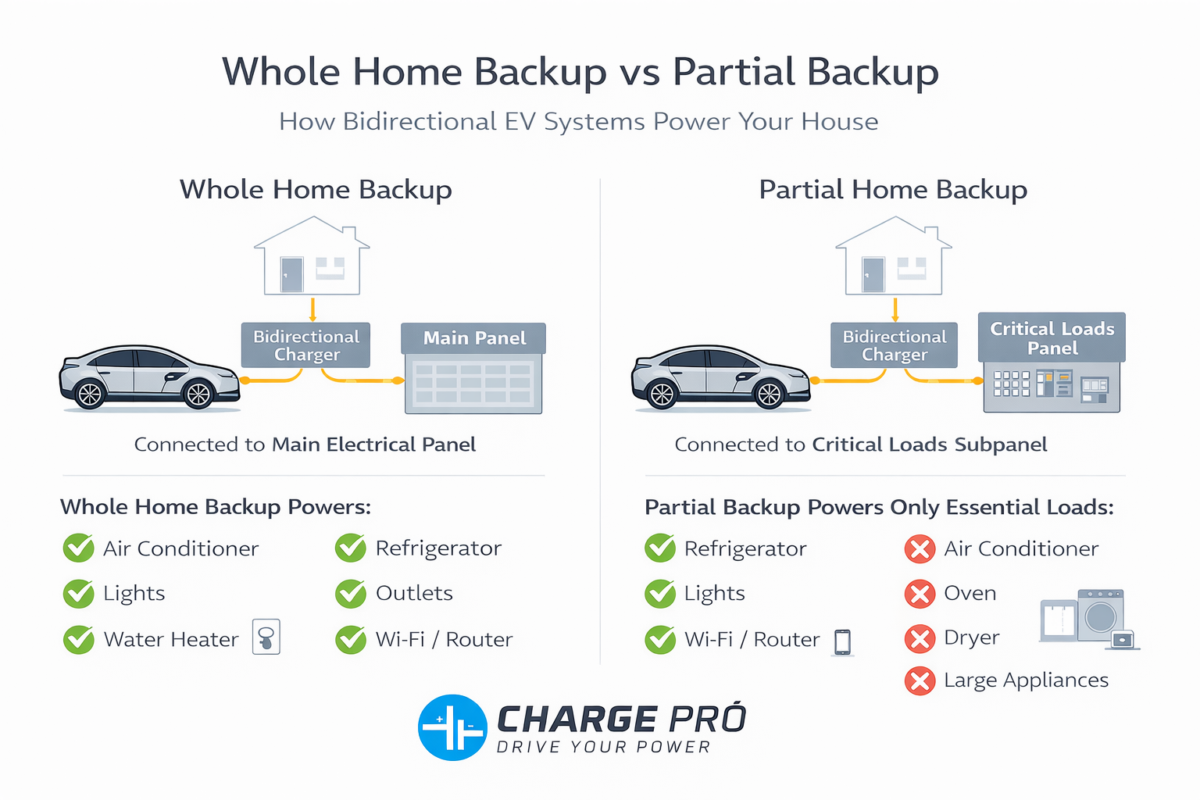
Partial Backup Systems
Partial backup systems power only selected essential loads.
Typical circuits include:
• refrigerator
• lighting
• internet equipment
• outlets
• medical devices
These systems rely on a critical loads subpanel, which isolates important circuits from high-power appliances.
Large loads are usually excluded, including:
• HVAC systems
• electric dryers
• ovens
• pool equipment
This approach is common because many backup systems cannot handle the high startup surge of large appliances.
Whole-Home Backup
Whole-home backup systems connect directly to the main electrical panel.
This allows the system to power nearly everything in the home:
• HVAC system
• kitchen appliances
• laundry equipment
• water heaters
• lighting and outlets
During an outage, the home functions normally.
GM’s Ultium ecosystem is designed to support whole-home backup, especially when paired with proper load management and soft-start HVAC systems.
Why Soft-Start AC Systems Matter
Air conditioning units are often the largest electrical load in a Texas home.
While a typical AC may run at 3–5 kW, the compressor can draw 6–8 times that amount when starting.
That short surge can overwhelm many inverters.
Soft-start devices solve this problem by gradually ramping up the compressor motor.
Benefits include:
• reducing startup surge by 60–70%
• lowering electrical stress
• allowing battery systems to start AC units smoothly
For example:
| AC Startup Condition | Surge Load |
|---|---|
| Standard startup | 30–40 kW |
| With soft-start device | 10–15 kW |
This reduction can make it possible for EV-based backup systems to run central air conditioning during outages.
Solar Integration and Texas’ Renewable Boom
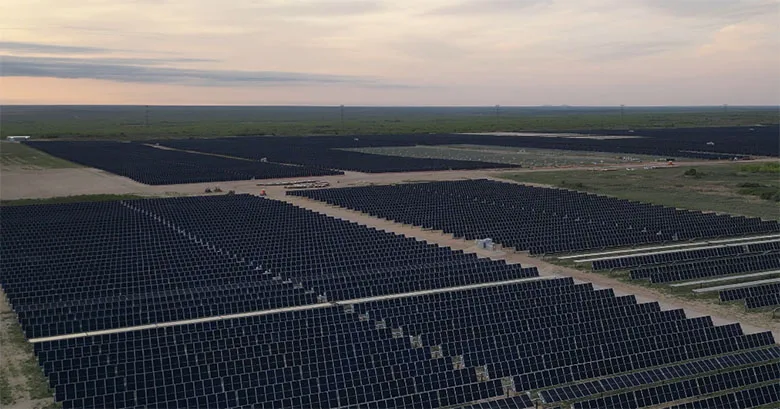
Texas is rapidly becoming a renewable energy powerhouse.
The state leads the U.S. in wind generation and is experiencing explosive growth in utility-scale solar.
However, renewable energy creates a new challenge:
Power production does not always align with demand.
Solar production peaks midday.
Wind often peaks overnight.
Electricity demand peaks during late afternoon and evening.
Energy storage solves this mismatch.
EVs as Solar Batteries on Wheels
When solar panels are combined with bidirectional EV charging, the vehicle becomes a massive energy storage system.
A typical residential solar system produces:
30–60 kWh per day
Instead of exporting excess solar power to the grid, homeowners could store it in the EV battery.
Energy flow could look like:
Solar → Home → EV battery → Home at night
Because EV batteries are so large, they can store far more energy than traditional home batteries.
| System | Capacity |
|---|---|
| Home battery | ~13–20 kWh |
| Ultium EV battery | 100–200+ kWh |
One EV can store 5–10 times more energy than most home battery systems.
Vehicle-to-Grid and the Future of Texas Energy
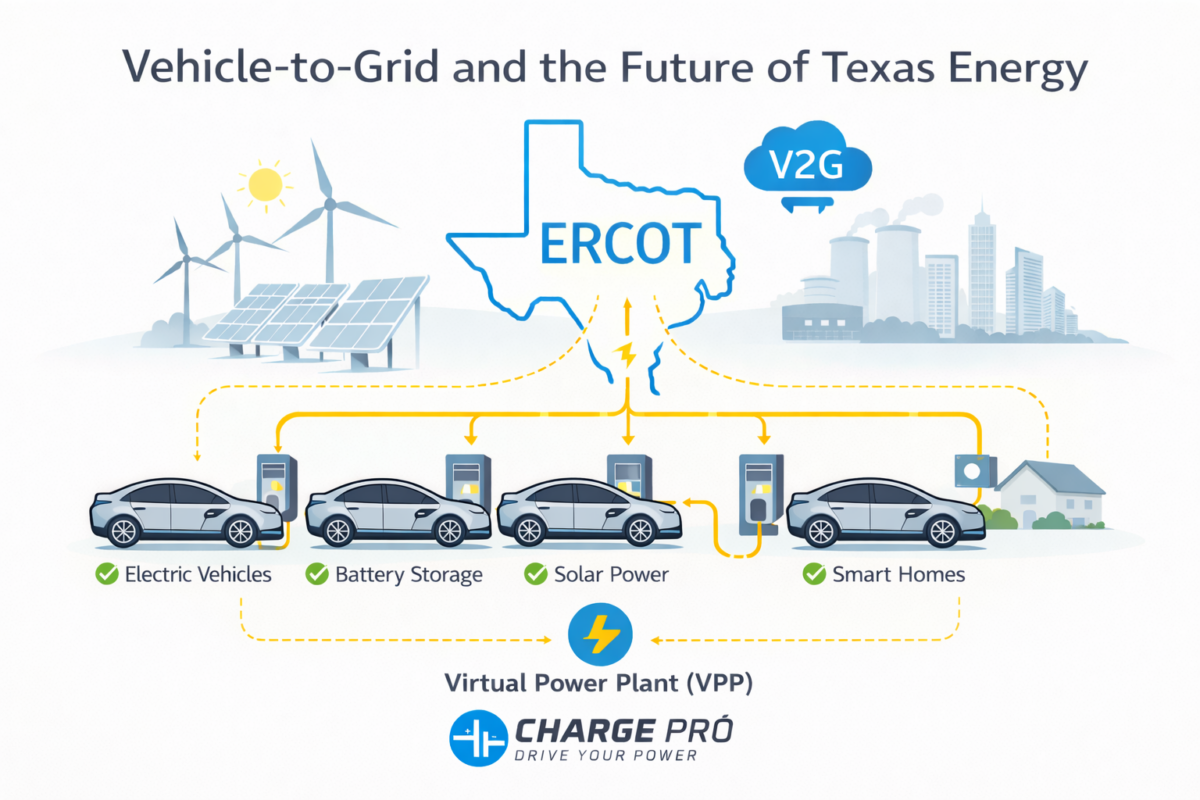
The next step beyond home backup is Vehicle-to-Grid (V2G).
Instead of only powering the home, EVs could export electricity directly back to the grid.
Texas is an ideal environment for this technology.
The grid is operated by Electric Reliability Council of Texas (ERCOT), which runs a dynamic wholesale electricity market.
Utilities and researchers are already testing systems where EV fleets can support the grid through Virtual Power Plants (VPPs).
A VPP coordinates thousands of distributed resources like:
• EV batteries
• home batteries
• solar systems
• smart thermostats
Together they can act like a large power plant.
Energy Arbitrage: Buying Low, Selling High (Future Potential)
Texas’ electricity market creates the potential for energy arbitrage — buying electricity when it is cheap and selling it when demand and prices rise.
Electricity prices in ERCOT can fluctuate dramatically.
| Grid Condition | Typical Price |
|---|---|
| High solar/wind output | Near $0 or negative |
| Normal demand | ~$20–40 per MWh |
| Extreme demand events | Up to $5,000 per MWh |
These price swings create the theoretical opportunity for EV batteries to store cheap electricity and release it later.
Important: This Is Not Widely Available Yet
While energy arbitrage is exciting, most homeowners cannot currently do this with their EVs in Texas.
Today’s bidirectional EV systems mainly provide:
• home backup power
• solar energy storage
They generally do not allow homeowners to sell energy back to the grid.
Several barriers still exist:
• residential EVs are not fully integrated into ERCOT energy markets
• bidirectional systems today are focused on Vehicle-to-Home, not grid export
• utility interconnection standards are still evolving
• regulatory frameworks for vehicle-to-grid participation are still developing
Why Texas Is Perfect for This Technology
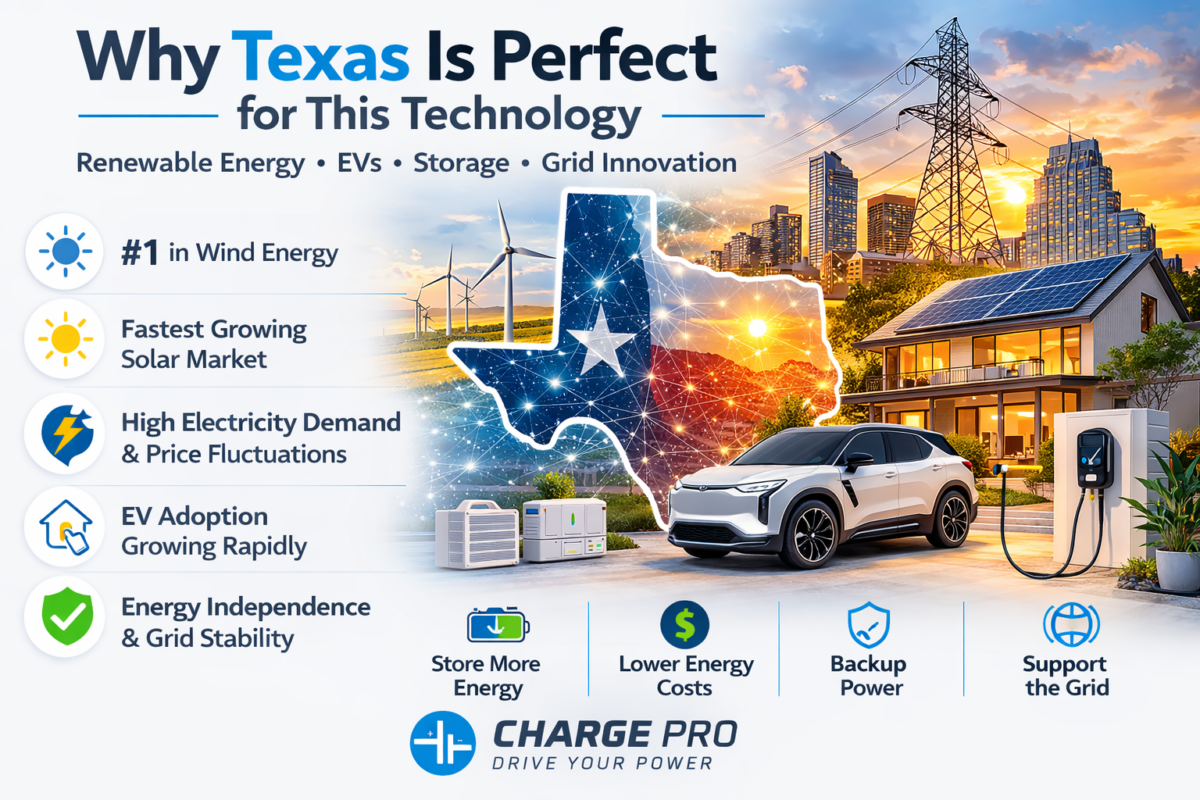
Several factors make Texas one of the best environments for bidirectional EV technology.
Rapid population growth
Energy demand continues rising as new residents and industries move to the state.
Explosive renewable expansion
Wind and solar generation continue to grow rapidly.
Extreme weather risks
Heat waves, winter storms, and hurricanes regularly challenge grid reliability.
Energy-intensive industries
AI data centers and advanced manufacturing require enormous amounts of electricity.
Bidirectional EV systems can help stabilize the grid while giving homeowners greater energy independence.
The Bigger Picture
Bidirectional EV technology is still in its early stages.
Today it primarily provides:
• backup power during outages
• solar energy storage
• increased energy independence
But the long-term vision is far bigger.
As EV adoption grows, millions of parked vehicles could form a vast distributed battery network that supports the electric grid.
Electricity could flow dynamically between:
• solar farms
• wind farms
• homes
• EV batteries
• utilities
• the grid itself
In the future, one of the most powerful energy assets in Texas may not be a power plant.
It may simply be parked in your garage.
FAQ: GM Bidirectional Charging
Can GM EVs power your house?
Yes. With the GM Ultium Home system, GM bidirectional charging allows certain EVs like the Silverado EV to power a home during outages.
Is vehicle-to-grid available in Texas?
Not widely yet. Most GM bidirectional charging systems currently provide vehicle-to-home backup, while vehicle-to-grid programs are still being tested.
How much power does an EV battery provide?
Many EV batteries store 100–200 kWh, which is far larger than most home battery systems.