
What Is Neurio Technology and Why Tesla Owners Love It in 2025
As electric vehicles (EVs) continue to surge in popularity across the globe in 2025, homeowners are increasingly facing the challenge of integrating high-power charging systems into their existing electrical infrastructure without incurring massive upgrade costs. This is where Neurio dynamic load management steps in as a game-changing technology, enabling seamless and intelligent EV charging that adapts in real-time to your home’s energy demands. By preventing electrical overloads while maximizing charging speeds, Neurio’s solutions, particularly when paired with systems like the Tesla Wall Connector, offer a sophisticated approach to home energy management. Neurio Technology Inc., originally a Canadian company founded in 2005 that specialized in smart energy monitoring devices, was acquired by Generac Holdings Inc. in 2019. By 2025, Tesla has largely transitioned to its own Tesla Remote Energy Meter (built on Neurio’s proven foundation) for even tighter integration with Powerwall home batteries and the Tesla ecosystem, yet the core Neurio hardware and principles remain the gold standard for many installers and owners.
Dynamic Load Management Explained: The Key Difference from Static Charging Limits
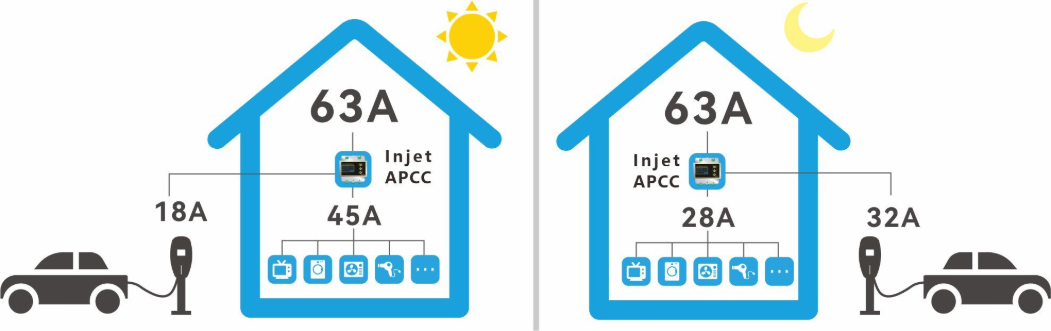
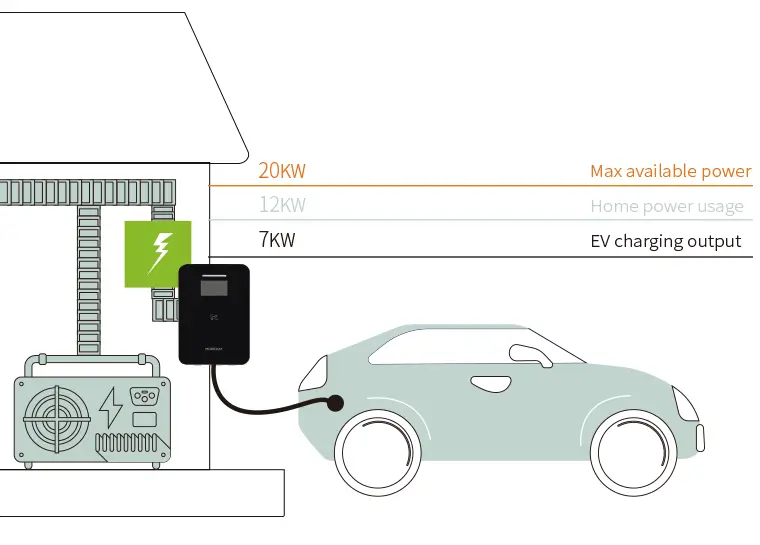
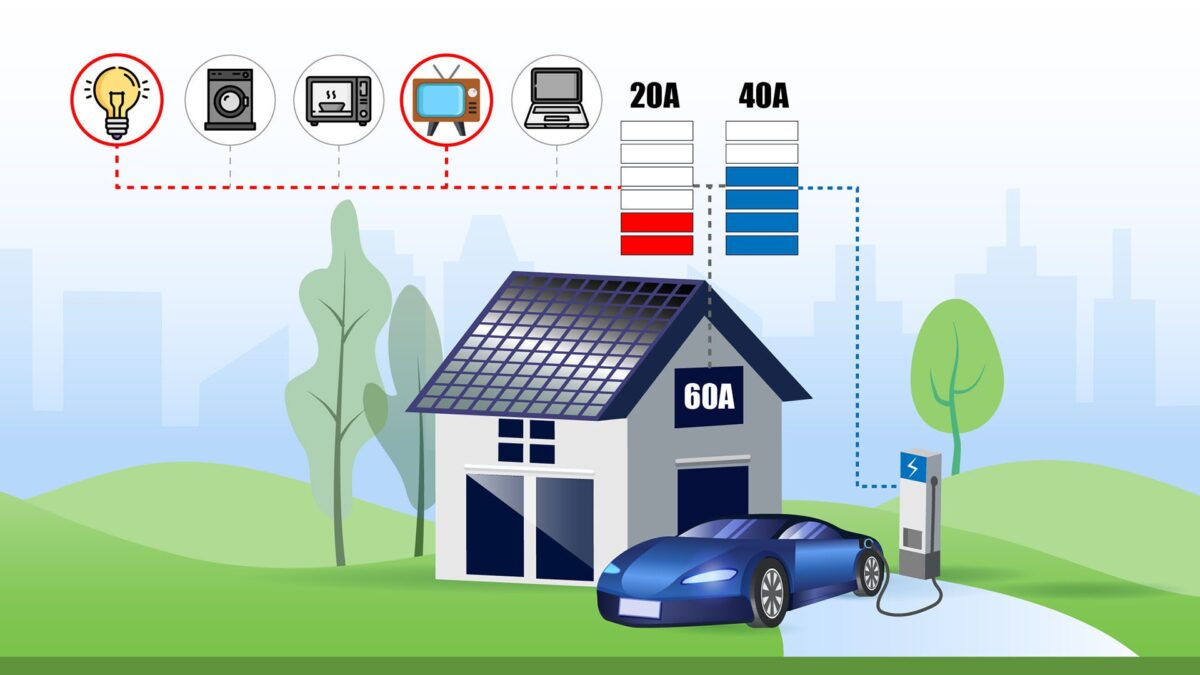
At the heart of this technology is dynamic load management, a process where the charging system continuously monitors the total electrical load – the sum of all power being drawn by appliances, lights, and other devices in a home at any given moment – and automatically adjusts the power allocated to the EV charger accordingly. Unlike static load management, which permanently locks the charger to a lower fixed rate (for example, 30 A instead of 48 A) just to stay safe, dynamic load management uses real-time data to deliver maximum possible current at any second. If your home’s electrical panel (the central distribution box usually rated 100 A, 150 A, or 200 A) is nearing its safe capacity because the oven, dryer, and heat pump are running simultaneously, the system instantly reduces charging power. The moment those loads drop, charging automatically ramps back to full speed – all without ever tripping a breaker.
How Neurio + Tesla Wall Connector Delivers 48A Charging Without Panel Upgrades
When it comes to actual EV charging, Neurio dynamic load management shines brightest with the Tesla Wall Connector Gen 3 – a Level 2 charging station capable of delivering up to 11.5 kilowatts (kW) of power. The Wall Connector is typically wired to a 60 A circuit breaker to achieve the full continuous 48 A charging rate that many Tesla models can accept. Without load management, adding 48 A of continuous load to a smaller residential service would frequently exceed the maximum power the panel can provide and require an expensive service upgrade. Neurio eliminates that need entirely, often saving homeowners $5,000–$15,000 while still allowing full-speed charging whenever the rest of the house permits it.
Current Transformers (CTs): The Non-Invasive Sensors That Make It All Possible
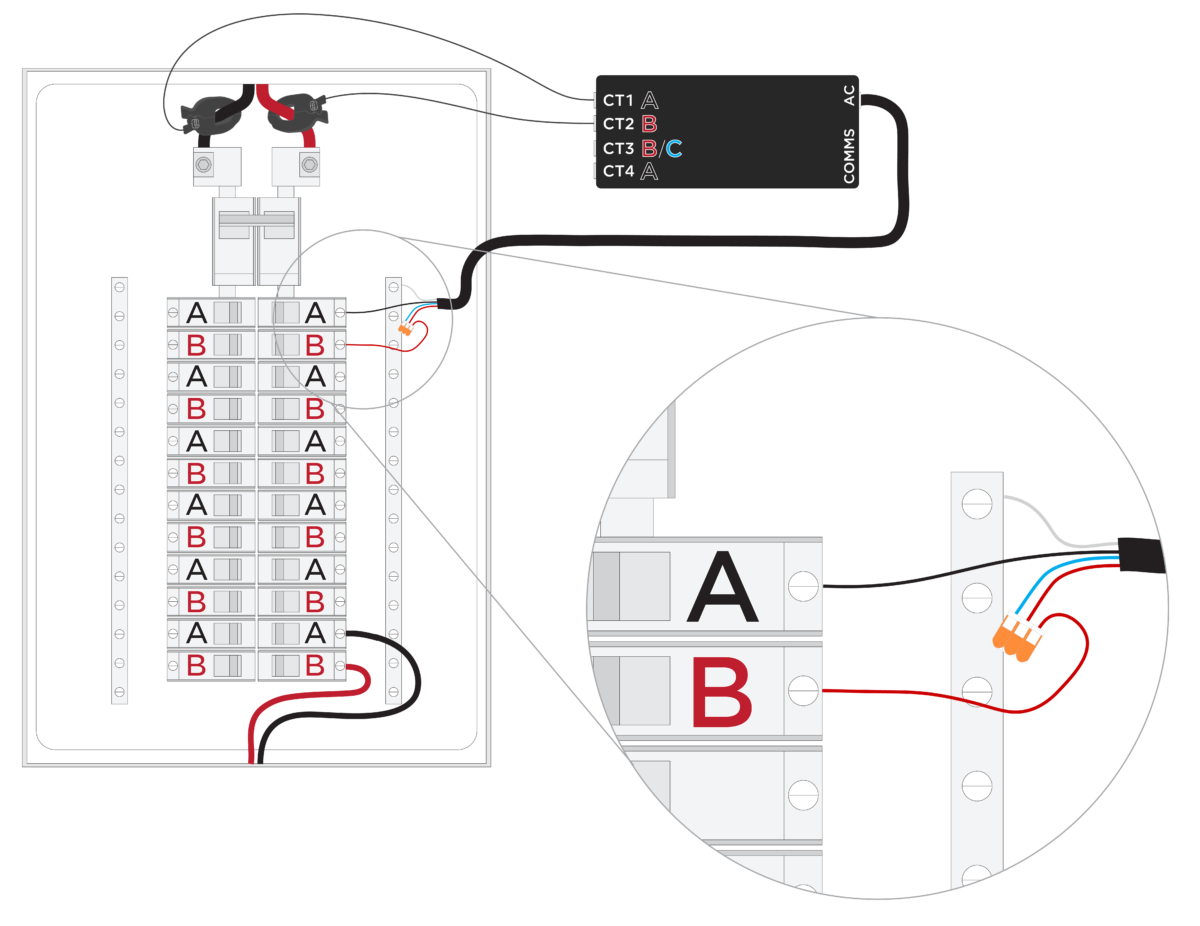
The magic begins with current transformers, commonly called CTs. These are doughnut-shaped, completely non-invasive sensors that simply clamp around the main service conductors (the thick wires coming into your panel from the utility meter) without cutting or splicing anything. A CT works on the principle of electromagnetic induction: the alternating current flowing through the main wire creates a proportional, much smaller current in the CT’s coil that the meter can safely measure. Tesla-approved CTs come in 200 A, 400 A, or larger sizes depending on your service size, and they measure current on both L1 and L2 legs.
Why Hardwired Beats Wi-Fi for Reliable Load Management
The brain that turns raw CT data into instant charging decisions is the Neurio (or Tesla Remote Energy) meter, connected to the Wall Connector via an RS-485 twisted-pair cable using the Modbus RTU protocol. RS-485 is an industrial-grade serial communication standard that is immune to Wi-Fi dropouts, 2.4 GHz interference, or internet outages. The Wall Connector queries the meter roughly once per second, receives precise whole-house load data, compares it to your configured Max Conductor Limit (usually 80 % of panel rating), and adjusts output amperage within milliseconds. This hardwired, local-only loop is why users describe the system as “rock-solid” even during storms when cloud-based competitors fail.
Neurio in Subpanel Installations: Perfect When the Wire Run from the Main Panel Is Long or Impossible
One of the most underrated advantages of the Neurio/Tesla Remote Energy Meter system is its ability to enable safe, high-power charging on a distant subpanel without requiring expensive upgrades to the main feeder wires.
In homes with detached garages, ADUs, barns, or basements 100–300 ft away from the main service, pulling a new heavy-gauge 60 A feeder all the way from the main panel can cost $8,000–$10,000 or more due to trenching, conduit, and materials like thick copper wire. Instead, electricians can install the Wall Connector directly on the existing subpanel, even if it has limited capacity, such as a 100 A feeder that can’t always handle full 48 A charging plus other local loads like tools or lights.
To make this work, the Neurio meter and its CT clamps are installed right at the subpanel alongside the charger. The CTs clamp around the incoming feeder conductors to the subpanel, monitoring the total load on that specific circuit in real-time. This setup ensures the subpanel is never overpowered by dynamically throttling the charger’s amperage when combined loads approach the feeder’s limit, then ramping back up when safe.
This targeted approach protects the subpanel and feeder from overloads, making Neurio an ideal solution for remote installations where the subpanel’s capacity is the bottleneck or running wires from the main panel is inefficient—truly shining as a cost-effective way to achieve fast charging without major rewiring.
When a Full Panel or Service Upgrade Still Makes Sense (Even with Neurio Available)
Although Neurio dynamic load management solves the vast majority of “I want 48 A charging but only have a 100A panel” problems, there are still situations where a proper service upgrade is the smarter long-term investment—especially when safety is at stake with older, deteriorated panels.
For instance, old electrical panels, particularly those showing signs of rust, corrosion, or age-related wear, can pose severe dangers that go beyond mere capacity limits. Rust and corrosion weaken the metal components inside the panel, compromising electrical connections and increasing the risk of arcing, which is when electricity jumps across gaps in faulty wiring, generating intense heat that can ignite nearby materials and start fires. Outdated panels often fail to trip breakers during overloads or short circuits, allowing excessive current to flow unchecked, leading to overheating, melting insulation, and ultimately catastrophic electrical fires. These fire hazards are exacerbated when adding high-demand loads like EV chargers, as the increased stress on already compromised systems can accelerate failures, potentially resulting in electrocution risks from exposed live wires or system breakdowns that leave your home without power. In fact, electrical failures from outdated panels account for thousands of home fires annually, making them a critical safety concern that Neurio alone cannot fully mitigate if the underlying hardware is unsafe. Other scenarios where an upgrade makes sense include:
- Multiple EVs (3+ cars) charging simultaneously at high speed
- All-electric homes with heat-pump water heaters, induction cooking, two heat pumps, and future expansion plans
- Existing 60–100 A “grandfathered” services that are already maxed out by basic loads
- Frequent simultaneous high loads (e.g., EV + sauna + pool heater + welder shop)
- Desire for true future-proofing beyond 48–60 A (hard-wired mobile connectors or future 80 A+ chargers)
- Local utility incentives or rebates that make a upgrade surprisingly affordable
In these cases, upgrading removes all constraints, eliminates the need for any load-management hardware, and adds significant resale value to the home. More importantly, it addresses inherent safety risks in old, rusty panels by replacing them with modern, code-compliant equipment that includes better arc-fault and ground-fault protection to prevent fires and shocks.
Neurio is brilliant for “right-sizing” today’s needs on sound existing infrastructure, but if your panel is showing rust, frequent breaker trips, burning smells, or is over 30–40 years old, a full upgrade is essential to avoid potentially life-threatening hazards—don’t rely on load management as a band-aid for fundamentally unsafe systems.
Limitations You Should Know Before Installing Neurio Dynamic Load Management
While outstanding for single- and dual-vehicle homes, native Neurio/Tesla dynamic management does not load-share between multiple Wall Connectors – that requires Tesla’s separate Group Power Management feature. Some older Square D or certain European panels have thick busbars that require split-core CT adapters. Communication cable runs are limited to about 500 ft in practice, and the system adds roughly $600–$900 to installation cost (still far less than a service upgrade).
The Future of Neurio in 2025 and Beyond: Tesla Remote Energy Meter and AI-Powered Charging
As we stand in late 2025, the evolution of Neurio’s legacy through Tesla’s Remote Energy Meter marks a pivotal shift toward more intelligent, connected, and predictive home energy ecosystems, blending robust hardware with cutting-edge artificial intelligence (AI) to redefine EV charging efficiency and grid resilience.
Looking further ahead into 2026 and beyond, the true game-changer lies in Tesla’s integration of AI-driven predictive load management, powered by the company’s proprietary Autonomous Control software suite—a machine learning (ML) framework that leverages neural networks to forecast household energy patterns based on historical data, weather APIs, and real-time inputs from connected devices. Unlike reactive systems that only adjust after detecting an overload, predictive algorithms analyze variables like time-of-use (TOU) electricity rates—tiered pricing where off-peak hours cost less—solar irradiance forecasts, and even your EV’s driving habits pulled from the Tesla app to preemptively optimize charging schedules.
For example, if ML models predict a midday solar surplus combined with low TOU rates overnight, the Remote Energy Meter could dynamically reserve battery capacity in your Powerwall for peak shaving (reducing demand during high-cost grid hours) while queuing your Wall Connector to draw full 48A only when excess renewable energy is available, potentially slashing annual bills by 25-35% for solar-equipped homes.
This isn’t speculative; Tesla’s December 2025 launch of the AI-Driven Charging Passport feature in the mobile app exemplifies this shift, using edge-computed ML on the vehicle’s onboard computer to anticipate charging needs based on route predictions, battery state-of-charge (SoC) degradation curves, and fleet-wide anonymized data, ensuring your Tesla arrives at home with just enough headroom for seamless dynamic integration.
Is Neurio Dynamic Load Management Worth It for Your EV in 2025? Final Verdict
As we wrap up this comprehensive guide, let’s cut straight to the chase: yes, Neurio-based dynamic load management—now primarily embodied in Tesla’s Remote Energy Meter—is absolutely worth it for optimizing EV charging in 2025, but with a key caveat on compatibility that broadens its appeal beyond just Tesla owners. Whether you’re pulling up in a Tesla Model Y, a Kia Niro EV, a Ford Mustang Mach-E, or any other plug-in electric vehicle (EV) that’s adopting the North American Charging Standard (NACS, formerly Tesla’s proprietary connector), this technology delivers unmatched reliability, cost savings, and safety without the headaches of static setups or cloud-dependent alternatives. In a year where EV adoption has hit 18% of new car sales globally and home charging infrastructure is straining under rising demand, Neurio stands out as a mature, battle-tested solution that’s evolved to fit the diverse EV landscape.
Now, addressing the elephant in the room: while Neurio was born in the Tesla ecosystem (specifically for the Gen 3 Wall Connector), its worth extends to all EVs in 2025 thanks to the Universal Wall Connector’s launch and NACS proliferation. The Universal version—available since early 2025—sports a built-in J1772 adapter for legacy non-Tesla plugs (like CCS1 on your Chevy Bolt or VW ID.4) and native NACS support for newer models from GM, Ford, Rivian, and even Hyundai/Kia, which are rolling out NACS ports standard by mid-year. Pair it with a Neurio meter, and you get the same dynamic magic: the charger queries the meter every second, adjusting amps based on whole-home (or subpanel) load, regardless of your EV’s brand.
That said, worthiness hinges on your setup. For single-EV homes with constrained panels or long subpanel runs (where Neurio’s local CT monitoring shines by protecting feeder limits without main-panel access), it’s a no-brainer—saving thousands while enabling 80%+ utilization of your service capacity. Multi-EV households might need Tesla’s Group Power Management add-on for load-sharing across units, pushing costs to $1,200+, but even then, it’s cheaper than a upgrade. And for safety-first folks eyeing rusty 40-year-old panels? Skip the band-aid—upgrade first, as Neurio can’t fix corrosion-induced arcing or fire risks from outdated breakers. Environmentally, it’s a win too: by optimizing grid draw, it reduces peak-hour strain, aligning with 2025’s smart-grid incentives that rebate up to $500 in many states.