

— A Comprehensive Playbook for EV Owners, Grid Operators, and the Future of Texas Power
By THOR Insights October 31, 2025
Introduction: The Grid on the Brink — And the Garage That Saves It
Texas is building the grid of the future — and your electric vehicle is at the center of it.
The Electric Reliability Council of Texas (ERCOT) manages one of the most dynamic, isolated, and weather-beaten power systems in the world. With demand set to nearly double by 2030 — driven by data centers adding 70.5 GW by 2028, crypto mining, oilfield electrification, and a population boom — the grid faces existential stress. Yet amid the warnings of blackouts and negative reserve margins, a quiet revolution is underway.
Smart charging is already turning EVs from grid liabilities into reliability assets. Bidirectional charging — especially via Tesla’s Powershare ecosystem — will transform every garage into a virtual power plant.
This isn’t speculation. It’s happening now. And if you own an EV in Texas, you’re sitting on a financial, environmental, and grid-stabilizing goldmine.
Part 1: Why the Texas Grid Is Struggling — A Deep Dive into Structural Crises
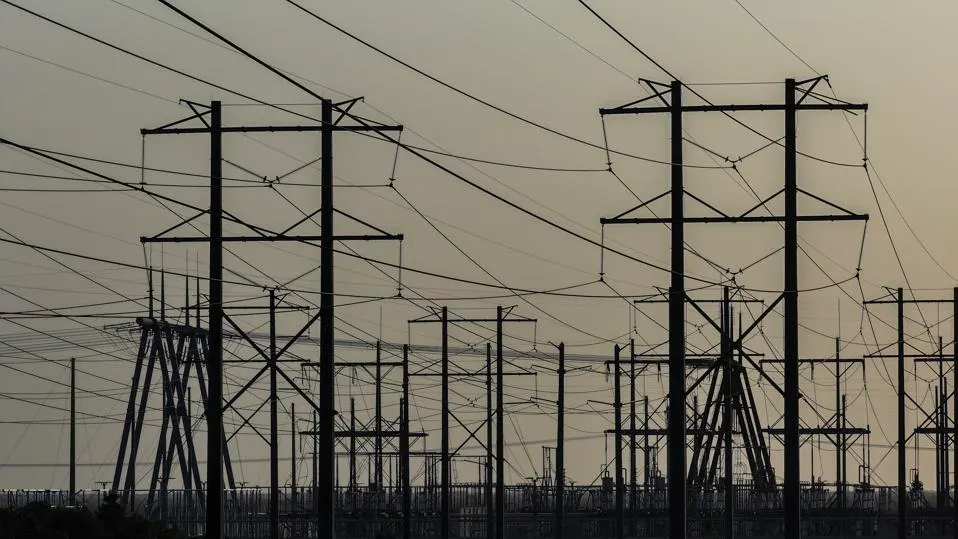
ERCOT isn’t just “old” or “underinvested.” It’s structurally misaligned with 21st-century realities.
Winter Storm Uri in 2021 froze gas wells, wind turbines, and pipelines — 52% of generation failed at once. Summer heat domes from 2022 to 2025 pushed demand past 85 GW while solar output drops after 7 PM. ERCOT operates as an energy island with less than 1 GW of import capacity through DC ties to SPP and Mexico, compared to over 80 GW of internal load. During crises, no meaningful power can flow in.
Natural gas supplies about 45% of ERCOT’s energy but runs at 80–90% capacity during peaks. Many plants are “must-run” for voltage support and lack ramping flexibility. When gas prices spiked to $200 per MMBtu in 2021, generators curtailed or failed. ERCOT’s May 2025 Capacity, Demand, and Reserves Report projects negative reserves in shoulder months like April and May by 2027 without new resources.
Texas leads the U.S. in wind with 30 GW and solar with over 20 GW, but curtails 5–10% of renewable output due to transmission constraints — West Texas wind can’t always reach Dallas. The CREZ lines built between 2008 and 2014 unlocked wind, but no major east-west backbone exists, and urban load centers like Houston and DFW face congestion.
ERCOT’s energy-only market lacks capacity payments, so generators earn revenue only when prices spike to the $5,000 per MWh cap. This discourages investment in flexible resources. Texas avoids FERC jurisdiction to preserve state control, but this blocks regional planning and cost-sharing for interties.
Smart charging counters every one of these vulnerabilities. It shifts load away from failure windows to overnight wind peaks or midday solar surpluses. It acts like a virtual import, reducing demand by 1–2 GW at critical moments — more than physical ties can provide. EVs respond in seconds, while gas plants take 30–60 minutes to ramp. Smart charging flips batteries from load to reserve, charging during wind spill from 2 to 6 AM and curtailing during emergencies. It absorbs “free” energy, with ev.energy shifting 97% of charging to off-peak and capturing negative-price wind. It’s location-agnostic, working anywhere with a smart charger and bypassing physical constraints. Demand response earns ERS payments of about $50–75 per kW-year, creating a parallel reliability mechanism. And it delivers distributed flexibility without new wires or federal approval.
Part 2: Smart Charging — The $470/Year Bill Cut You Can Get Today
Smart charging uses real-time ERCOT data — wholesale prices, carbon intensity, emergency alerts — to charge your EV when power is cheap, clean, and abundant.
The process starts with data integration. Apps pull ERCOT’s generation forecasts, pricing hubs, and ERS alerts. You set your departure time, say 7 AM, and the algorithm back-calculates to finish charging at 6:59 using only the cheapest, greenest hours. During ERS events, which can last up to 12 hours and occur 4 to 24 times a year, charging pauses. Rewards come through Qualified Scheduling Entities based on availability — 95% or higher earns full payout.
The leading app is ev.energy, Texas’s first EV-based virtual power plant launched in 2021. It shifts 97% of peak load off-peak and curtails 1.4 kW per vehicle during 7-to-10 PM events, paying via PayPal. It works with over 80% of EVs and chargers, including Tesla. David Energy focuses on real-time price chasing, charging when wholesale prices dip below $20 per MWh — common nightly when West Texas wind floods the system. Many Texas utilities like Oncor, CenterPoint, and AEP offer time-of-use plans with free charging from 10 PM to 6 AM.
Your charger must support OCPP 1.6J or higher — think Tesla Wall Connector Gen 3, ChargePoint Home Flex, or Wallbox Pulsar Plus. These allow the app to pause or slow charging instantly during grid stress. Set your minimum state of charge to 20% in the app to protect range while giving the system 80% flexibility. Always plug in by 3 PM to qualify for evening ERS events, the most lucrative. Pre-cool or heat the cabin at 4 AM using surplus renewables. If you have solar, ev.energy prioritizes excess panels before touching the grid.
Stack the savings: $350 per year from time-of-use and price chasing, $120 from eight ERS events at $15 each, and 140 kg of avoided CO₂ annually. Add the 30% federal tax credit up to $1,000 and $500–$1,200 from your utility. With ten minutes of setup and daily plug-in discipline, you’re looking at about $470 per year in total value.
Part 3: Tesla Changes Everything — The EV That’s Also a Grid Company
With over 40% of Texas EVs, Tesla isn’t just dominant — it’s redefining grid participation.
The Tesla API integrates seamlessly with ev.energy and David Energy — no extra hardware needed. The Wall Connector Gen 3 offers built-in power management and OCPP readiness. Over-the-air updates mean your car gets smarter without hardware swaps. Pair it with solar and Powerwall, and ev.energy charges your Tesla from excess solar first, then stores wind surplus in the Powerwall for later top-ups.
Tesla owners see higher ERS availability — 99% versus the 95% average — thanks to the always-connected API. That translates to full payouts every event.
Part 4: The Bidirectional Revolution — Your EV Becomes a $1,000/Year Side Hustle

By the fourth quarter of 2025, Tesla’s Powershare rolls out via over-the-air update 2025.20 to the refreshed Model Y Performance, Cybertruck (already live), Model 3 Highland, and upcoming refreshed Model S and X. This unlocks 11.5 kW of AC export — or 3 to 5 kW DC to the grid — through the Tesla Wall Connector with bidirectional firmware, the Universal Wall Connector, or Tesla’s official V2L discharger.
Starting in 2026, your EV earns through ERS-10 at $75–$100 per kW-year for 1-to-2-hour discharges four to twelve times a year, frequency regulation at $10–$30 per MWh with four-second response, non-wires alternatives at $200–$500 per kW-year for local congestion relief in Houston or Austin, and home backup credits of $100–$300 per year for being grid-ready.
A Model Y with an 82 kWh battery exporting 40 kWh during a two-hour ERS event pockets $120 and still leaves home with 60% charge. ERCOT’s NPRR 1181, finalizing in 2026, enables V2G aggregation. The Tesla VPP expands through pilots like Guadalupe Valley Electric Cooperative’s Peak-Time Payback. Qualified Scheduling Entities like CPower, ev.energy, and Tesla Energy handle bidding.
Set a 30% minimum state of charge in the Tesla app, and the system auto-bids. Battery wear is less than 1% extra degradation per year per NREL’s 2024 study. Tesla’s eight-year, 100,000-mile warranty covers Powershare cycling. Most insurance policies now include a grid services rider at no extra cost.
Part 5: ERCOT’s Vision for 2030 — A Grid That Learns, Adapts, and Connects
ERCOT isn’t waiting for collapse. The Grid Research, Innovation, and Transformation initiative, launched in September 2025, is the most ambitious R&D push in ISO history. Through the Research and Innovation Partnership Engagement program, ERCOT collaborates with Southwest Research Institute, the University of Texas, and industry to prototype AI-driven forecasting, inverter stability, and virtual power plant scaling.
A $360 million DOE-funded project breaks ground in 2025 to link ERCOT with the Southeast via SPP and MISO, delivering 5 to 10 GW of bidirectional flow by 2030. Real-Time Co-optimization trials starting in May 2025 refine ancillary services and pricing. Large loads like data centers get faster interconnections if they commit to curtailment on command.
The July 2025 Long-Term Hourly Peak Demand and Energy Forecast projects 13.6% annual energy growth through 2031, pushing consumption toward 500,000 GWh by decade’s end. Solar and wind will exceed 50% of capacity by 2030 with less curtailment thanks to virtual power plants.
CEO Pablo Vegas calls it a grid that’s not just reliable but dynamic — where data centers and EVs are assets, not risks.
Part 6: Your Action Plan — From $470 Today to $1,000+ Tomorrow
Start today by installing a Tesla Wall Connector or OCPP-compatible Level 2 charger. Download ev.energy, enable ERS, and plug in by 3 PM daily. Enroll in a time-of-use plan. Set your departure for 7 AM and minimum state of charge to 20%.
By 2026, enable Powershare with the over-the-air update coming in Q4 2025. Upgrade to 200-amp service ideally a smart panel like Span or Lumin. Join the Tesla VPP or an ERCOT ADER pilot. Earn $1,000 or more per year per vehicle.
Conclusion: Your Garage Is the Grid’s Lifeline
The Texas grid isn’t broken — it’s evolving. And you are the evolution.
The 50 GWh of EV storage already in Texas driveways equals half of ERCOT’s 2025 reserve shortfall. Every smart-charging EV is a micro-peaker, micro-battery, and micro-import. Every bidirectional Tesla is a $1,000 side hustle and blackout insurance.
The first movers — those who stack software, hardware, and discipline — will get paid first, and most.
Your garage isn’t just where you park. It’s where the future of Texas power begins.
Ready to join the grid’s secret weapon? Start with ev.energy and plug in by 3 PM today. Enable Powershare in Q4 2025. Watch your Tesla earn while Texas stays lit.
Texas isn’t waiting for the future. It’s charging it.
Sources: ERCOT CDR (May 2025), LTDEF (July 2025), GRIT Initiative, NPRR 1181, NREL V2G Study, ev.energy Impact Report, Tesla OTA Roadmap