
Yes on essentials, and for a typical outage even with the whole house running, on our standard package. Run on essentials only (about 15 kWh a day), two Powerwall 3 plus a Model Y would have outlasted even a long Winter Storm Uri outage and kept the lights on for about 70% of the Houston homes Hurricane Beryl knocked out. Run the whole house with the AC set a few degrees warmer or with gas heat (about 35 kWh a day), the same setup lasts about two days: enough for a typical Uri outage and about 40% of Beryl outages. In a 105°F heat wave at full comfort, plan on about a day.
Nobody had published this, so we did it. We took real restoration data from the two storms Texans remember most, the battery sizes of the cars that can run Powershare, and three realistic home loads, and asked one question: would this home have stayed powered from the moment the grid dropped until it came back? Every number and assumption is below so you can check our work or run your own home in the Powershare backup calculator.
How long the power was really out
Winter Storm Uri, February 2021
ERCOT ordered rolling outages at 1:20 a.m. on February 15, 2021 and did not cancel the last order until 12:42 a.m. on February 18, a window of about 71 hours with up to 20,000 MW of load shed. The “rolling” part mostly failed. A University of Houston Hobby School survey of 1,500 Texans in the ERCOT region found 69% lost power. Among them the median total time without power was 36 hours (mean 42), and more than two in five were out for over 24 hours straight.
Houston had it worse. In Harris County 91% of residents lost power, the median total outage was 42 hours (mean 49), and more than three in five went 24 hours or more in a row without power. Austin stayed below freezing for 144 straight hours, per Pecan Street. Across Texas, EIA data put the average customer at 19.6 outage hours for all of 2021, against 7.2 hours in 2020.
Hurricane Beryl, July 2024
Beryl came ashore near Matagorda around 4 a.m. on July 8, 2024, and about 2.26 million CenterPoint customers lost power. CenterPoint’s own updates give us the restoration curve. We measured each point from landfall and turned “customers restored” into “share still out”:
| CenterPoint update | Days after landfall | Restored | Still out (approx.) |
|---|---|---|---|
| Jul 9, 3:30 p.m. | 1.5 | 640,000+ (28%) | 72% |
| Jul 10, 1:45 p.m. | 2.4 | Nearly 1 million (44%) | 56% |
| Jul 12, noon | 4.3 | 1.4 million+ (62%) | 38% |
| Jul 13, 8 p.m. | 5.7 | 80% | 20% |
| Jul 15, 8 p.m. | 7.7 | 92% | 8% |
| Jul 17, 11:30 a.m. | 9.3 | 98%+ | 2% |
Read it this way: a backup system that lasts 4.3 days would have covered every customer restored by noon on July 12, about 62% of them. Two months earlier, the May 16, 2024 windstorm hit roughly 917,000 CenterPoint customers, and more than 27,000 were still out a week later. Houston outages are often long, and they come in summer heat.
Austin’s 2023 ice storm
Austin’s longest recent outages came two years after Uri. In the ice storm that started January 30, 2023 (Winter Storm Mara), ice brought down trees and power lines across the city, and about 171,000 Austin and Travis County households lost power. Five days in, about 13% of Austin Energy customers were still out, and nearly 20,000 were still waiting almost a week later. Some homes went more than 10 days without power. This wasn’t a grid failure like Uri, so it can happen any winter.
On essentials only, two Powerwall 3 and a Model Y would have carried a home about five days, through most of it. And the car doesn’t have to stay parked. Powerwall keeps the house running while you drive to a charger outside the outage area, charge up, and come home with a couple more days of backup. That is the big advantage of having both: your backup can go refuel itself.

How much energy each setup actually has
Powerwall 3 holds 13.5 kWh usable, and our standard package has two, for 27 kWh. The car is the big tank, but you won’t give Powershare all of it. We assumed the car starts at 90% and the owner lets Powershare draw it down to 20%, so you keep enough range to reach a charger or shelter. That’s 70% of the pack. We then took off 10% for conversion and other losses.
| Setup | Energy for the home | Essentials (15 kWh/day) | Whole home with AC or heat (35 kWh/day) | Large all-electric (60 kWh/day) |
|---|---|---|---|---|
| One Powerwall 3 alone | 13.5 kWh | 0.9 days (22 h) | 0.4 days (9 h) | 0.2 days (5 h) |
| Two Powerwall 3 alone | 27 kWh | 1.8 days (43 h) | 0.8 days (19 h) | 0.5 days (11 h) |
| Powerwall 3 + Model Y Standard | ~57 kWh | 3.8 days | 1.6 days | 0.9 days |
| Powerwall 3 + Model Y Premium | ~61 kWh | 4.1 days | 1.7 days | 1.0 day |
| Two Powerwall 3 + Model Y Premium | ~74 kWh | 5.0 days | 2.1 days | 1.2 days |
| Cybertruck + Powerwall 3 | ~89 kWh | 5.9 days | 2.5 days | 1.5 days |
| Two Powerwall 3 + Cybertruck | ~103 kWh | 6.8 days | 2.9 days | 1.7 days |
For scale, the average Texas home used 1,096 kWh a month in 2024 per EIA, about 36 kWh a day. Tesla’s own Powershare estimates assume 30 kWh a day and a car at 90%: up to two days for Model 3/Y Standard, over two for Premium and over three for Cybertruck. At 30 kWh a day our math gives about 1.9, 2.0 and 3.0 days. Ours run a little lower because we stop the car at 20% and allow for losses.
The backtest: Uri and Beryl, setup by setup
For Uri we tested two outages: a typical one (42 hours, the Harris County median and the statewide mean) and a long one (71 hours, the full ERCOT load-shed window). For Beryl we read each setup’s runtime against the restoration curve to get the share of affected CenterPoint customers whose whole outage it would have covered.
| Setup | Uri, essentials | Uri, whole home with heat | Beryl, essentials: customers covered | Beryl, whole home with AC: customers covered |
|---|---|---|---|---|
| One Powerwall 3 alone | No (22 h) | No | ~15% | ~5% |
| Two Powerwall 3 alone | Typical yes (43 h), long no | No (19 h) | ~35% | ~15% |
| Powerwall 3 + Model Y Standard | Yes, typical and long | No (39 h) | ~55% | ~30% |
| Powerwall 3 + Model Y Premium | Yes, typical and long | Borderline (42 h) | ~60% | ~30% |
| Two Powerwall 3 + Model Y Premium | Yes, typical and long | Typical yes, long no | ~70% | ~40% |
| Cybertruck + Powerwall 3 | Yes, typical and long | Typical yes, long no | ~80% | ~45% |
| Two Powerwall 3 + Cybertruck | Yes, typical and long | Typical yes, long borderline (70 h) | ~85% | ~50% |
The one tough case is a home that heats with electric strips in a freeze, where use can climb well past 100 kWh a day (see our summer vs winter guide). Keeping the heat pump on without its strips, adding a Powerwall 3, or a quick drive to a charger is what carries a home like that through a full Uri-length outage, and we plan for it on every install.
How these profiles compare to a real heat wave
These three daily loads are deliberately simple. In a 105°F heat wave, a 2,200 sq ft home running central AC normally can use 60 to 70 kWh a day, roughly double our 35 kWh “whole home” profile, so in a Beryl-style heat wave, cooling a few rooms instead of the whole house keeps you closer to the table. Our summer vs winter guide breaks it down by AC size and heating type.
What the numbers say
Powershare turns a car you already own into days of backup power. Moving from whole-home use to essentials more than doubles runtime on every setup, and with two Powerwall 3 the house keeps running even while the car is away recharging. For most Texas storm outages, that is enough to ride it out at home.
What solar would have changed
Solar recharges Powerwall 3, so it changes Beryl a lot and Uri much less. The days after Beryl were hot and mostly sunny, so a home with solar on essentials could have stretched backup well past the curve. Uri brought snow, ice and short days: Pecan Street measured solar output at about 70% of normal across its homes, and panels under snow make little or nothing. Our base case assumes no solar.
How we calculated this
- Powerwall 3 usable capacity: 13.5 kWh, full at the start (Storm Watch or manual charge before the storm).
- Car usable pack (estimates; Tesla doesn’t publish usable figures): Model Y Standard about 69 kWh, Model Y Premium about 75 kWh, Cybertruck about 120 kWh (from its 123 kWh rated pack). We use a conservative 75 kWh for Model Y Premium here; our calculator uses 79 kWh, which adds a little backup.
- Our essentials profile here (about 15 kWh a day) includes a freezer, a gas furnace blower or one small AC zone. The bare-minimum setting in our calculator (about 7 kWh) leaves those off, so its numbers run longer.
- Powershare limit: car starts at 90%, Powershare stops at 20%. Energy from the car = pack × 0.70 × 0.90 (10% for losses). Example: 75 × 0.70 × 0.90 = 47 kWh, plus 13.5 kWh = 61 kWh.
- Runtime = energy ÷ daily use. Daily use: essentials 15 kWh (fridge, freezer, lights, Wi-Fi, fans, phones, a gas furnace blower or one small AC zone used sparingly), whole home 35 kWh (central AC or heat pump running normally), large all-electric 60 kWh (big home, resistance or auxiliary heat in a freeze).
- Uri outage lengths are total hours without power from the UH Hobby School survey, so they assume no recharge during brief restorations. That’s conservative: if your power flickered back, Powerwall 3 and the car would have recharged.
- Beryl coverage: we linearly interpolated CenterPoint’s restored percentages between updates, timed from the 4 a.m. July 8 landfall, and treat “restored by day X” as “outage no longer than X days.” It ignores customers who lost power later or lost it twice.
- No solar, no driving out to recharge, and figures rounded to the nearest tenth of a day and nearest 5%.
Getting the most out of it
- AC startup surges. The car supplies up to 11.52 kW through the Wall Connector, and each Powerwall 3 adds 11.5 kW continuous with a 185 A motor-start rating, but a large or older AC compressor plus a well pump or oven at the same moment can still overload a smaller setup. We check this before we install, and our HVAC partner adds soft starts where needed, so the AC starts cleanly on backup.
- Cold costs energy. Batteries deliver less when cold, and a car spends some of its own energy keeping its pack warm. Plan on a bit less than the table in a hard freeze.
- Keep the car charged. If it’s at the office or low when the grid drops, Powerwall 3 runs the house until it’s back.
- Plug in before the storm arrives. Start the outage with the car full, and drive to a working charger later if it runs long.
- Skip the heat strips. Keep the heat pump running, but not on emergency heat, which can double a home’s daily use overnight.
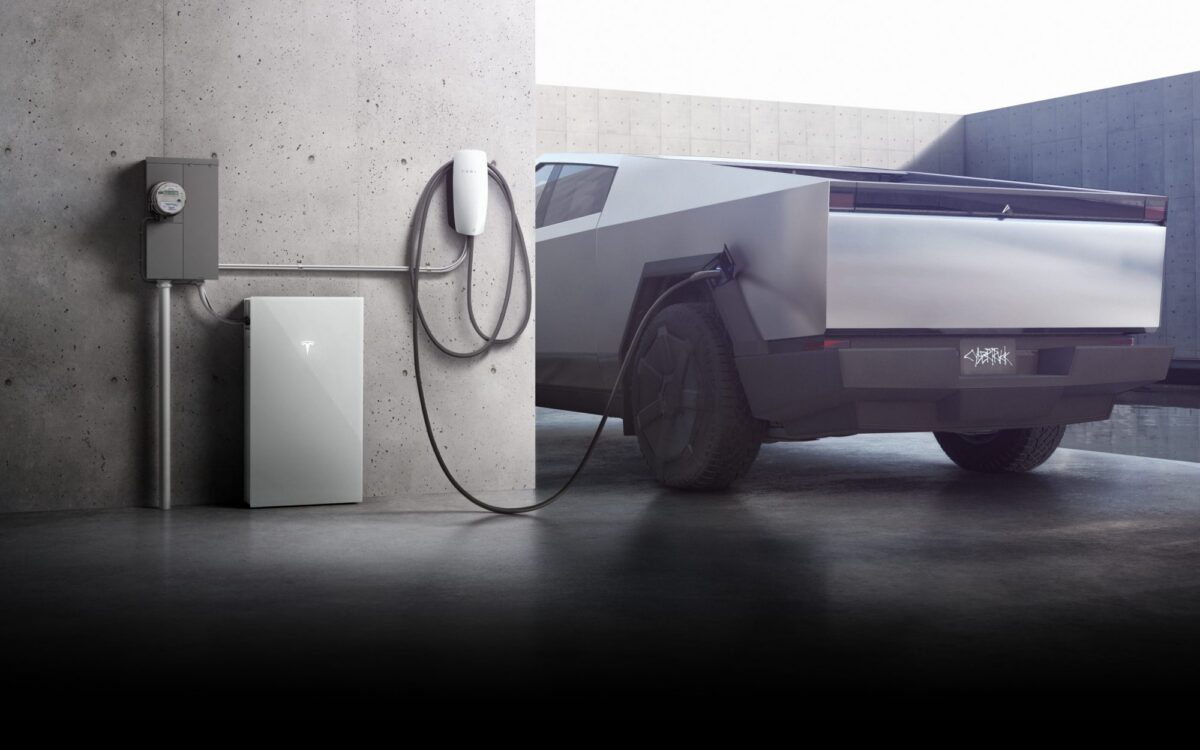
And it all happens on its own. When the grid fails, the system islands the home on its own and Powerwall 3 takes the load. When Powerwall 3 runs low, the car powers the home and refills it, and when the grid returns the system reconnects without you touching anything.
Before the next storm: checklist
- Charge the car to 90% or higher a day before a forecast freeze or hurricane.
- Set your Powershare limit in the Tesla app (we used 20%) so you keep driving range.
- Make sure Powerwall 3 is full; leave Storm Watch on.
- Park at home and plug into the Wall Connector before the weather arrives.
- Decide now which loads you’ll turn off in an outage: second AC zone, pool pump, dryer, oven, EV charging for a second car.
- In a freeze, set the thermostat lower and avoid emergency heat; in summer, cool one or two rooms instead of the whole house.
- Check the app twice a day and switch to essentials-only early if restoration looks slow. Don’t wait until day two.
For the full picture on seasons, read our guide to Powershare backup in summer vs winter, and to decide how much of the house to back up, see whole-home vs partial backup in Texas. If you drive a Cybertruck, compare Powershare Gateway vs Powerwall 3.
Find out how long your home would last
Send us a few photos of your panel and meter and we’ll tell you which Powershare setup fits your home and your storm risk, usually the same day. Charge Pro Texas is a Tesla Certified Installer with crews in Houston, Austin and Dallas. We do the work, pull the permit, and most Powershare installs take one day. After install, Tesla may need to activate Powershare on your car, which can take a little while.
Frequently asked questions
Would Tesla Powershare have lasted through Winter Storm Uri?
On essentials only (about 15 kWh a day), yes. Two Powerwall 3 plus a Model Y last about five days, longer than both a typical 42-hour Uri outage and the full 71-hour ERCOT load-shed window. With the whole house running and gas heat, or a heat pump with the thermostat set lower, the same setup lasts about two days, enough for a typical Uri outage. Homes that heat with electric strips use far more.
How many Houston homes would Powershare have covered in Hurricane Beryl?
Using CenterPoint’s restoration curve, two Powerwall 3 plus a Model Y Premium on essentials (about five days) would have fully covered roughly 70% of affected customers, and two Powerwall 3 plus a Cybertruck about 85%. With the whole home running AC, two Powerwall 3 plus a Model Y covers about 40%, and the car can drive off to recharge for more.
Is Powerwall 3 alone enough for a Texas storm outage?
For short outages, yes. One Powerwall 3 holds 13.5 kWh, about 22 hours on essentials and 9 hours with AC or heat running. Two Powerwall 3, our standard package, double that to about 43 and 19 hours. Adding a Powershare car is what turns that into multiple days.
How much of my car’s battery does Powershare use?
You choose. You set a limit in the Tesla app for how far Powershare can draw the car down. In our math we assumed a start at 90% and a stop at 20%, so about 70% of the pack goes to the house and you keep enough range to drive.
Does cold weather reduce Powershare backup time?
Yes. Batteries deliver less energy in the cold, the car uses some energy to keep its pack warm, and homes use far more energy for heat in a freeze. Plan on less runtime than our table shows during an event like Uri.
Does solar make a difference in a long outage?
Yes, mostly in summer. Solar recharges Powerwall 3, so after a hurricane like Beryl, when days were hot and mostly sunny, it can stretch essentials-only backup well beyond the numbers here. In a snow and ice event like Uri, panels make much less, and nothing when covered.
Sources
- How freezing rain, tree-lined neighborhoods and above-ground power lines prolonged Austin power outages (Texas Tribune, Feb 2023)
- Austin Energy outages still affect 68,000 customers, some on day 5 (Community Impact, Feb 2023)
- Slow power repairs after winter storm anger Austin residents (AP via NBC DFW, Feb 2023)
- The Winter Storm of 2021 (University of Houston Hobby School of Public Affairs)
- The Winter Storm of 2021 in Harris County (University of Houston Hobby School of Public Affairs)
- ERCOT lost almost half of generation capacity in storm, causing 20 GW load shed (S&P Global)
- Winter storm home energy analysis (Pecan Street)
- Texas’ winter storm sent power outages soaring (Axios, citing EIA)
- Hurricane Beryl Advisory 39 (National Hurricane Center)
- Hurricane Beryl restoration updates (CenterPoint Energy)
- CenterPoint Energy talks post-Beryl restoration efforts (S&P Global)
- Nearly 30,000 CenterPoint customers still in the dark 1 week after deadly storm (ABC13 Houston)
- Table 5A: Residential average monthly bill and consumption by state, 2024 (U.S. Energy Information Administration)
- Powershare support (Tesla)
- Tesla Cybertruck battery passport (InsideEVs)
- Tesla Model Y Long Range AWD specifications (EV Database)
- Tesla Model Y Standard specifications (EVKX)